Accenture just wiped $315 billion India IT's worst fear off the shelf

Photo: panumas nikhomkhai
Accenture delivered a warning shot this week that landed hardest not in its own stock, but across an entire industry halfway around the world. The American consulting giant forecast quarterly sales below Wall Street expectations, cut its full-year revenue outlook, and disclosed a $400 million hit to its Middle East business from the ongoing Iran conflict. By Friday, India's benchmark IT index had fallen to a three-year low, with shares in TCS, Infosys, and HCLTech dropping between 4% and 8% in a single session.
That $400 million figure isn't the only number that stings. India's IT sector is worth $315 billion and has already shed roughly 29% of its value this year, making it the worst-performing segment of the Indian market by a wide margin. For context, the broader Indian market is down about 8% over the same period. The gap tells you something: this isn't just a bad market. Something specific is going wrong for Indian IT.
Why Accenture's problems become India's problems
Accenture is what analysts call a bellwether, meaning its results tend to signal the direction for the whole industry. When it reports that clients are delaying deals and pulling back on managed services, Indian IT firms feel it quickly. TCS, Infosys, and their peers earn a significant share of revenue by providing exactly those services to exactly those same kinds of clients, many of them American.
Indian IT companies have limited direct exposure to the Middle East conflict, according to Pritesh Thakkar, an equity analyst at PL Capital. But indirect exposure is real: delayed deal closures, slower project ramp-ups, and clients who take longer to make decisions all compress revenue in ways that show up quietly over several quarters.
Morgan Stanley noted that investors had already priced in a weak start to India's fiscal year 2027. But Accenture's commentary pushes even that cautious expectation into question. "With this commentary from Accenture," the bank wrote, "we think hopes of any meaningful improvement in growth in 2Q could start fading away."
There is also a macro headwind piling on. The U.S. Federal Reserve has recently signaled it is leaning toward raising rates rather than cutting them, which tends to reduce investor appetite for emerging-market stocks. Indian IT firms earn heavily in U.S. dollars but trade in Indian rupees, so anything that pushes global capital away from emerging markets tightens the pressure on their share prices.
The longer problem that one quarter cannot fix
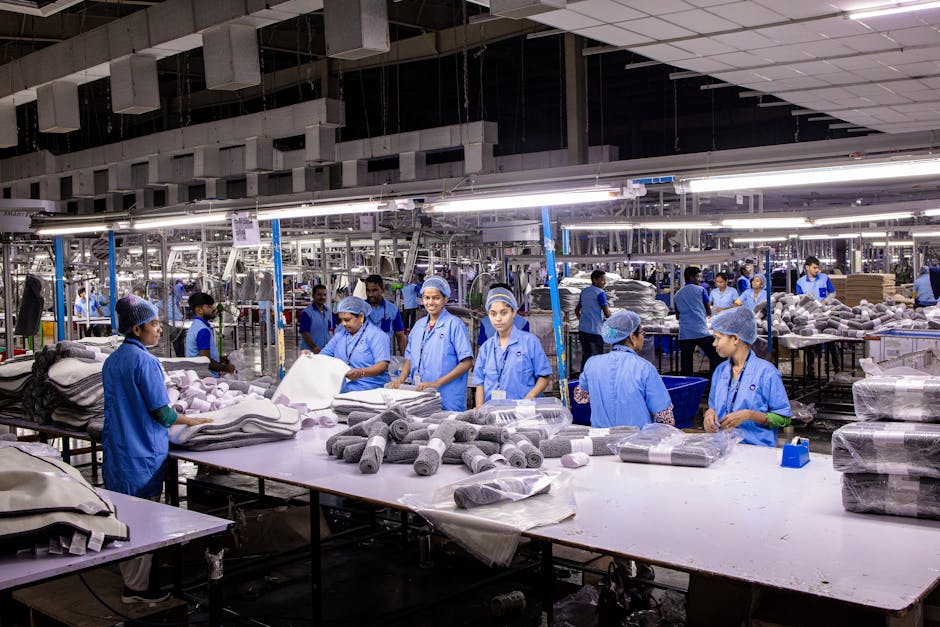
The deeper anxiety in this story is structural. Indian IT has built a $315 billion industry largely on a labor-intensive model: large teams of engineers delivering software development, maintenance, and back-office technology services at competitive cost. That model is now under direct pressure from AI tools that can automate significant portions of exactly that work.
Mayuresh Joshi, head of equity research at William O'Neil & Co, put it plainly to Reuters: the market is looking for growth, which is "clearly missing." He added that Indian IT companies will need to move fast, both through internal development and acquisitions, to position themselves inside the AI-driven value chains that hyperscalers and platform companies are building.
The current order books still support near-term revenues. The problem is that the pipeline, the new deals that would drive growth a year or two out, is thinning. Clients are deferring non-essential technology spending while geopolitical and economic uncertainty makes long-term commitments harder to justify.
That combination, a structural disruption from AI layered on top of a cyclical slowdown driven by conflict and rate pressure, is what makes this moment harder to wait out than a typical soft quarter. The Indian IT sector has navigated downturns before. The question now is whether this one has a different shape.