Broadcom's CEO just called AI investors casino gamblers

Photo: Brett Sayles
Broadcom's chief executive Hock Tan didn't mince words at a conference in Singapore this week. A lot of AI investors, he said, "have no clue what they are investing in." They "set very extreme expectations only to find out that it's almost like they are in a casino." Coming from the head of one of the world's most important chip companies, that's not a contrarian take from a skeptic on the sidelines. It's a warning from someone sitting at the center of the boom.
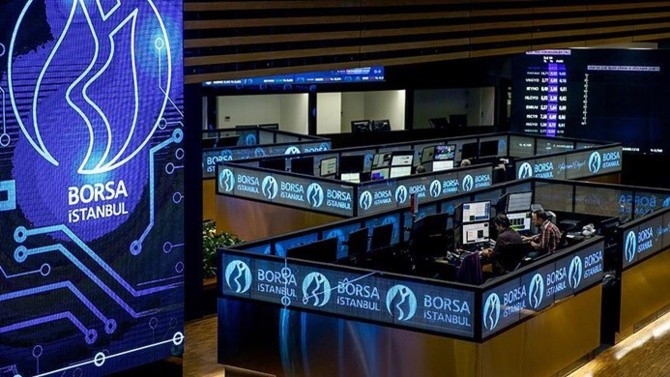
Markets heard it. South Korea's benchmark index tumbled 6.25% on Tuesday as investors shed chip stocks. Samsung Electronics dropped 7.4%. SK Hynix, a major memory chip maker, fell 10%. Japan's SoftBank, which is an investor in OpenAI, lost 8.5%. Tokyo Electron, which makes chip manufacturing equipment, fell more than 7%. Taiwan's exchange lost nearly 2%, with chipmaking giant TSMC down by a similar amount. In the US, Micron Technology slid 3.9%, and Nvidia, AMD, and Broadcom itself also fell.
That's a lot of market value erased in a single session, and two things drove it.
The casino warning
Tan's comments landed because he named something investors had been quietly anxious about. OpenAI, the most prominent AI company in the world, had annualised revenues of $50 billion at the end of September. That sounds enormous. But as Tan pointed out, the company is still losing money because training costs are so high. And a significant slice of enterprise revenue is coming from pilot projects, not committed, recurring business. Tan compared it to a kid burning through $10 of arcade tokens in ten minutes: a lot of activity, no lasting skill, nothing to show for it.
The deeper concern is the structure of the AI investment cycle. Companies are spending vast sums building AI infrastructure, much of it funded by debt, on the assumption that revenue will scale fast enough to justify those costs. That assumption hasn't been tested yet. If the enterprise customers running AI pilots don't convert into long-term buyers at the margins the chip companies are pricing in, the math breaks badly.
The China factor
Tan's remarks weren't the only catalyst. The South China Morning Post reported Monday that CXMT, a Chinese memory chip maker that debuted on the Shanghai stock market in late July, has made substantial progress on a new chip architecture that would improve memory density. Memory chips store the data that AI processors draw on during calculations, which makes them a critical and lucrative part of the supply chain.
Samsung, SK Hynix, and Micron currently dominate that market. If CXMT can close the technical gap, those three companies face real pricing pressure. Chris Beauchamp, chief market analyst at IG, put it plainly: CXMT's progress is "dangerous for high-flying tech stocks who have promised so much, and on whom the entire stock market rally seems to rest." Better chip technology is good for the companies and consumers buying chips. It is painful for the companies whose premium valuations depend on limited competition.
These two storylines reinforce each other. A less profitable AI revenue model plus a more competitive chip supply market is exactly the scenario that justifies the kind of elevated risk Tan is describing.
For ordinary people, the immediate effect is in investment accounts. Anyone with a broad index fund has meaningful exposure to Nvidia, TSMC, Samsung, and their peers, because those stocks have driven so much of the market's gains over the past two years. A sustained repricing of AI expectations doesn't stay contained to a specialist corner of the market. It spreads.
The longer pattern here is familiar. New technologies attract capital that outruns the actual business models. The technology often turns out to be real. The early valuations often turn out to be wrong. Tan's casino metaphor isn't a prediction that AI fails. It's a reminder that "real technology" and "sound investment" are not the same sentence.