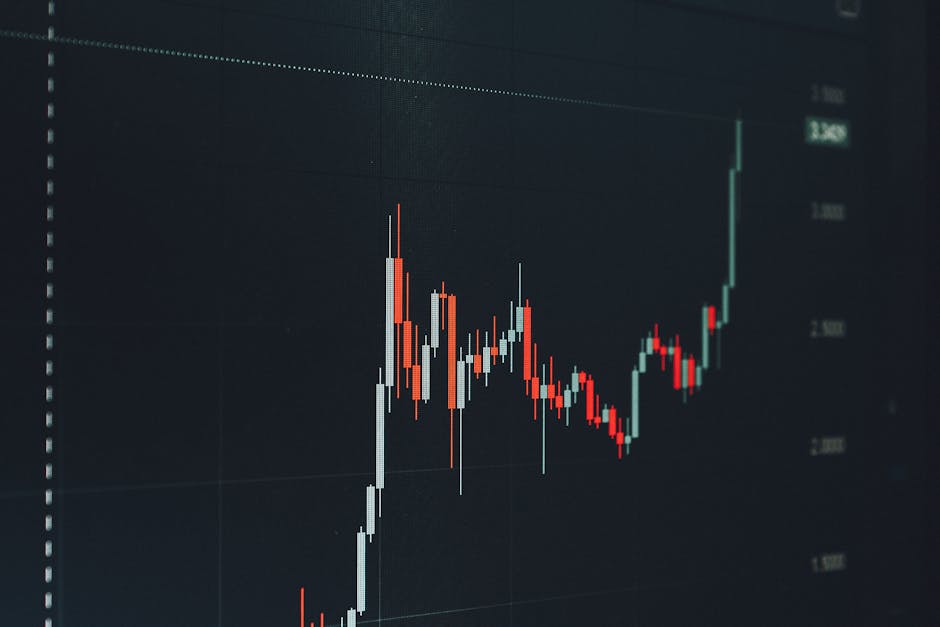
J.P. Morgan says Bessent's $4 billion bond fix is a $50 payment on a $400,000 mortgage

Photo: StockRadars Co.,
Scott Bessent just tried to calm a bond market charging the U.S. government rates it hasn't seen in nearly two decades, and J.P. Morgan spent a Friday morning explaining why the fix won't hold.
The backdrop: the 30-year Treasury yield hit 5.34% on August 18, a 19-year high, according to Reuters. The next morning, outstanding public debt crossed $40 trillion for the first time, NBC News reported. These are not abstract records. The interest bill attached to that debt reached roughly $857 billion in just the first nine months of this fiscal year.
Bessent responded by directing Treasury to at least double its bond buybacks. The program targets bonds maturing in 10 to 30 years, lifting the cap from $2 billion to at least $4 billion per operation between September 9 and November 4. Long-term yields fell, stocks rose. Within two days, every bit of that had unwound.
What buybacks actually do
Treasury is buying back longer-dated bonds while issuing shorter-dated bills to pay for them. The total debt doesn't shrink. The maturity profile shifts. James Sullivan, J.P. Morgan's co-head of global fundamental research, described it on CNBC's "Squawk Box" as "paying your mortgage with your credit card." The pressure eases. The arithmetic stays the same.
J.P. Morgan's rates team reinforced that warning in client notes, cautioning that investors could read the surprise intervention as "lacking credibility" and demand a higher return for holding long-term U.S. debt. That higher return is a higher yield, which means higher borrowing costs for the government, not lower ones. The cure would worsen the condition it was meant to treat.
The scale problem is the part the headlines tend to skip. The Treasury market is worth roughly $32 trillion. A $4 billion operation against that total is one dollar for every $8,000 outstanding. Put it in household terms: a homeowner carrying a $400,000 mortgage making an equivalent gesture would be putting down about $50. It is not nothing. It is also not a plan.
The buyers are disappearing
The deeper issue isn't the buyback size. It's what's sitting on the other side of the transaction.
China's holdings of U.S. Treasuries are at an 18-year low. Foreign official custody holdings are the lowest in 14 years, according to Treasury International Capital data cited by Sullivan. Meanwhile, leading artificial intelligence companies have issued $200 billion in debt so far this year, up 80% from a year earlier, Sullivan told CNBC, competing directly with Treasuries for the same pool of investor money.
Evercore ISI reached a similar conclusion, arguing the operation changes almost nothing about the need to finance what it called a "tidal wave" of technology company debt on top of large federal deficits, according to CNN.
Bond markets balance supply and demand through price. When buyers pull back, the yield has to rise to attract new ones. Everything on Sullivan's list adds to supply. Nothing on it adds buyers.
The Treasury buyback program has legitimate precedent: the government has run versions of it on and off since 2000. The objection here isn't that the tool is improper. It's that deploying it as a surprise move, in a market that values predictability above almost everything else, signals anxiety rather than confidence. Markets read the signal as much as the action.
For ordinary Americans, higher long-term yields don't stay in the bond market. They travel. Mortgage rates are priced off long-term Treasury yields, so a sustained 5%-plus environment keeps borrowing costs elevated for anyone buying a home or refinancing. Corporate borrowing costs rise too, which eventually lands on hiring and investment decisions. And the federal interest bill, already nearly $857 billion through nine months of this fiscal year, keeps compounding.
The arithmetic, as J.P. Morgan put it, has only been rescheduled. Rescheduling carries its own price.