Oura just scrapped a $15bn stock listing days after filing for it

Photo: Aedrian Salazar
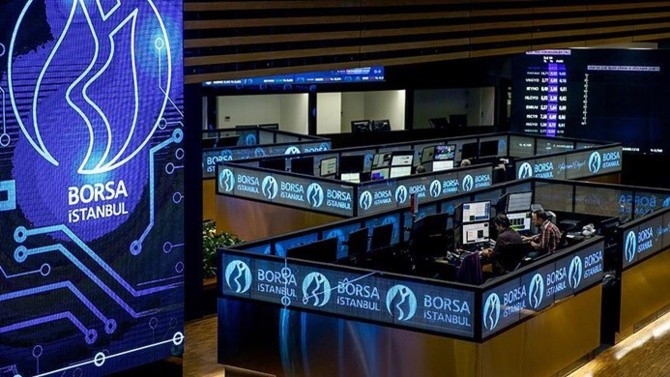
Oura filed paperwork to raise $2.2 billion from public investors on a Friday. By the following Tuesday, it had walked it back. The Finnish-American smart ring maker, valued at $15 billion in its planned listing, cited "uncertainty in the IPO market" and gave no timeline for when it might try again.
That's not a minor scheduling change. That's a company with nearly $1.2 billion in sales over nine months, growing fast, and still concluding that this is not the moment to go public.
Why the IPO window just slammed shut
The core problem is what's happening to bond yields. The interest rate on 10-year US government debt hit its highest point since 2007 this week. That number matters far beyond Wall Street: when the return on safe government bonds rises, investors demand higher returns from riskier bets too, including new stock listings. Companies that looked attractively priced a month ago can suddenly look expensive, because the alternative of just buying government bonds now pays more.
The Federal Reserve has resumed raising its benchmark rate, the rate that ripples through nearly every loan and investment in the country, after a brief pause. That shift has made borrowing more expensive across the board, which hits growth companies especially hard. Their value is built on future earnings, and future earnings look smaller when discounted against higher rates.
Oura is not the only company reading the room. Holtec International, a US nuclear technology firm, postponed its own listing earlier this month. Holtec blamed what it called "an unusual confluence of developments" including rising energy costs, military conflicts, global trade tensions, and inflation concerns. Research firm Renaissance Capital noted that the IPO market had a reasonable start to the year before tailing off sharply in the third quarter. Concerns about AI spending slowdowns added to the pressure.
Samuel Kerr, global head of equity capital markets at Mergermarket, put it plainly: "What is now clear is we are in a very different IPO market to the one we envisaged just a few weeks ago."
What this means beyond Oura
For Oura specifically, the pause is not a crisis. The company made a pre-tax profit of $70 million in the nine months to June on $1.2 billion in sales. It expects revenue for its full fiscal year to have grown 90%. CEO Tom Hale said the company has "the luxury of choosing our moment," and the financial picture suggests that's not just spin.
But the retreat carries a wider message. When a profitable, fast-growing consumer tech company with 5.7 million paying subscribers concludes the market isn't ready for its debut, it signals that the appetite for new public offerings has genuinely dried up, at least for now.
For ordinary investors, a tighter IPO market means fewer opportunities to buy into high-growth companies at their listing price, which is often when early gains are available. For employees at private tech companies who hold stock options, delayed listings mean delayed liquidity, meaning they can't turn those paper stakes into actual money. For the broader economy, a frozen IPO market is one signal, among several right now, that the cost of capital has risen enough to change behavior.
Oura also carries a separate complication. A class action lawsuit filed in August claims its rings cannot accurately track sleep, since sleep occurs in the brain and not on a finger. The company says the lawsuit did not factor into its IPO decision, and its financial results suggest investors were not deterred by it. But it's the kind of unresolved legal cloud that makes a rocky market even easier to use as a reason to wait.
The smart money, it seems, is sitting out until the rate picture clears. For Oura, that means a $15 billion debut is still out there somewhere, just on no one's calendar.