Twenty thousand sailors are stuck inside the Strait of Hormuz
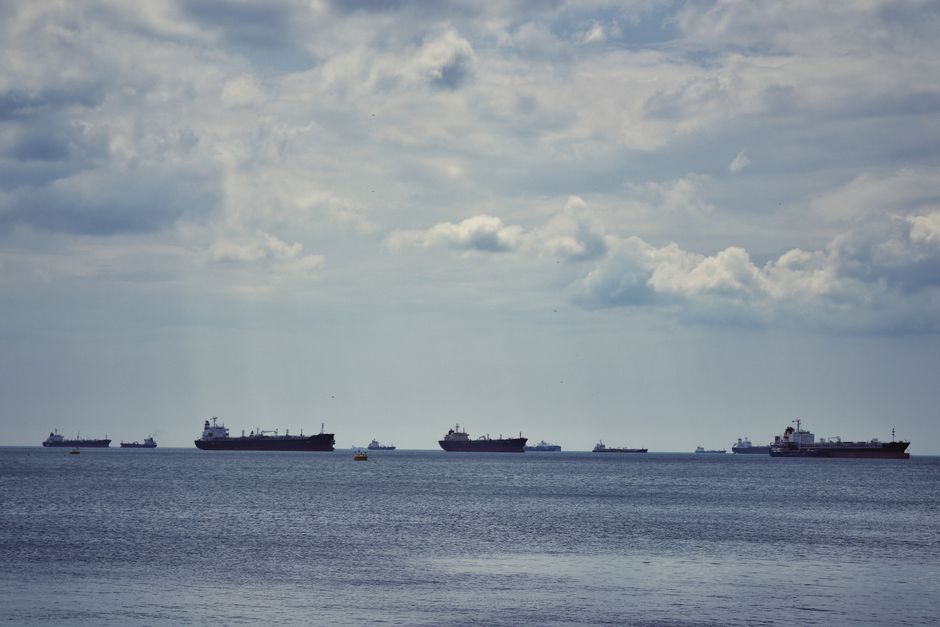
Photo: Fatih Özkan
The Strait of Hormuz has been largely closed for three months, and the people who run the world's shipping industry gathered in Athens this week to say something blunt: even if the guns stop, the ships aren't moving.
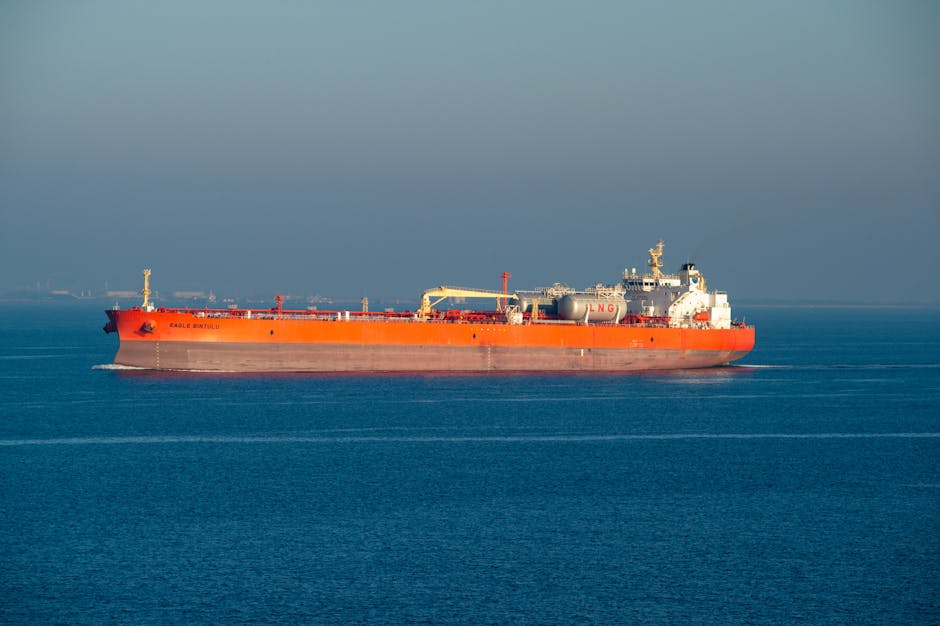
That's the message from Rene Kofod-Olsen, CEO of V.Group, one of the world's largest ship management companies. His firm manages around 800 vessels globally and currently has 13 of them stuck inside the Gulf, about half of them oil tankers. Speaking at the Posidonia shipping conference, he put the situation plainly. "I don't believe that global shipping by definition will go through in a material way the Strait of Hormuz before those things are actually guaranteed," he said, referring to verified safe passage backed by the international community.
A ceasefire is technically in place. But as Kofod-Olsen noted, "you still have kinetic activity," meaning drone and missile strikes are still happening. That gap between a declared ceasefire and an actual halt to violence is now the defining obstacle for the entire industry.
The human toll
Across the region, roughly 20 percent of the world's daily oil supply once flowed through this single 21-mile-wide passage. Before the conflict began on February 28, an average of 125 vessels passed through Hormuz every day. That traffic has effectively stopped. Hundreds of ships remain inside, caught between a war zone they can't safely exit and ports they can't yet reach.
The Bahamas maritime registry alone has 14 flagged ships inside the Gulf carrying more than 900 seafarers. Dwain Hutchinson, the registry's managing director, told Reuters that crew safety is the top priority, but that his organization leaves the decision to sail into or out of the region to individual ship owners. Supplies are reaching crews and teams can be rotated within the Gulf, executives said, but the strain is real and deepening.
For those seafarers, this is not an abstract financial story. It is months trapped aboard a vessel, in a conflict zone, with no clear exit date.
The cost of uncertainty
Beyond the human dimension, the logistics of global trade are bending under the pressure. Alex Gregg-Smith, president for marine and offshore at Bureau Veritas, a major ship safety certification body, told Reuters that ship owners are now "operating in irregular frameworks" that are straining both their operations and their insurers. When insurers can't price risk accurately because the situation changes daily, premiums rise and coverage terms tighten. Those costs don't disappear. They travel up the supply chain and eventually land in the price of the goods that move through the water.
Evangelos Marinakis, chairman of Capital Maritime and Trading, one of the world's largest tanker operators, said his company was "lucky enough" not to have had any vessels inside the Gulf when the conflict started. He was direct about what it would mean if they had: "We wouldn't be able to take such a risk."
What it would take to reopen
Kofod-Olsen was specific about the conditions required before shipping returns to anything like normal. It's not enough for the U.S. and Iran to agree to stop fighting. The international community would need to provide credible, enforceable guarantees of safe passage, the kind that ship operators can show their insurers and their crews. Without that, the calculus for any captain or ship owner is simple: the risk of a missile strike outweighs the revenue from a single cargo run.
The deeper issue is institutional trust. The ceasefire that exists on paper has not stopped attacks. Until that changes, the Strait of Hormuz remains closed in any practical sense regardless of what diplomats announce. The ships are there. The sailors are there. And the door, for now, stays shut.