ABB just paid $5.5 billion for the valves inside everything

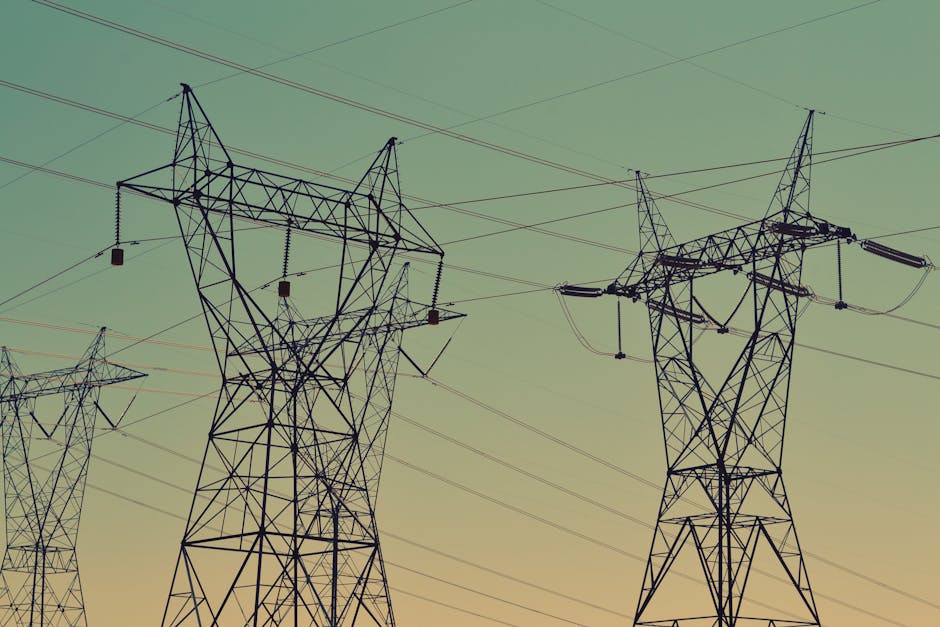
Photo: David Brown
ABB just made the biggest bet in its history, and most people have never heard of what it bought. The Swiss engineering group announced a $5.5 billion cash deal for Rotork, a British company that makes the automated valves controlling the flow of liquids and gases through oil and gas pipelines, water treatment plants, power stations, chemical facilities, and mines. Wall Street noticed: ABB shares were up roughly 3% in premarket trading in Zurich after the deal was announced alongside a strong earnings report.
Rotork is based in Bath, England, and had revenue of around $1 billion in 2025, growing at about 8% a year. That growth rate, plus a profit margin of 24.6%, is exactly what attracted ABB. The company's own margin rose again in the latest quarter, and executives say absorbing Rotork will push it higher still.
Why a valve company is worth $5.5 billion
The deal is easy to underestimate because valves are invisible infrastructure. But automated valve control is one of those technologies that sits quietly inside almost every physical system that modern life depends on. When a water utility adjusts flow through a treatment plant, when an oil refinery manages pressure in a pipeline, when a power generator responds to load changes, something like Rotork's equipment is doing the work. The shift toward automation in those industries, driven partly by labor costs and partly by the precision demands of clean energy infrastructure, has made that equipment more valuable.
ABB CEO Morten Wierod described the deal as expanding the company's automation offering "at the field device layer," which is the layer closest to the physical world, where sensors and actuators actually touch pipes, motors, and grids. That layer is where automation spending is accelerating fastest right now.
The timing is also deliberate. ABB sold its robotics division to Japan's SoftBank Group last October for $4.8 billion. That money has been sitting on the balance sheet, and ABB's chairman had signaled earlier this year that a larger acquisition was coming. Rotork is funded almost entirely by the robotics sale proceeds, which means ABB is essentially swapping one automation business for another, higher-margin one.
A bigger story about British assets
The Rotork deal is also the latest in a wave of foreign bids for UK-listed companies in 2026. Bids have already come in for Intertek, Schroders, and Unilever's food unit, among others. Britain is on pace to record its highest year ever for inbound dealmaking, according to Reuters. The pattern suggests overseas buyers see UK assets as attractively priced, a combination of a relatively weak pound against the dollar and valuations that haven't fully caught up with earnings.
For ordinary people in the UK and the US, the immediate consequence of any individual deal like this is limited. Rotork's products are sold to industrial operators, not consumers. But the broader pattern matters: when the infrastructure companies that manage water, power, and fuel are owned by foreign multinationals, the policy and investment decisions that govern that infrastructure get made further away from the communities it serves.
ABB's own quarter gives the deal context. Orders jumped 30% to just over $12 billion in the three months through June, driven in significant part by data center construction tied to artificial intelligence. Revenue rose 14% to $9.48 billion and operating profit rose 20% to $1.93 billion, both beating analyst expectations. The company is growing fast across almost every segment it serves.
The $5.5 billion for Rotork is the largest deal in ABB's history, topping a $4.2 billion acquisition in 2011 and a $3.9 billion purchase in 2012. After years of selling off divisions and running lean, ABB is spending again. The question is whether the industrial automation market stays as hot as its order book currently suggests.