Europe's debt is heading for a wall, and the fix is politically explosive
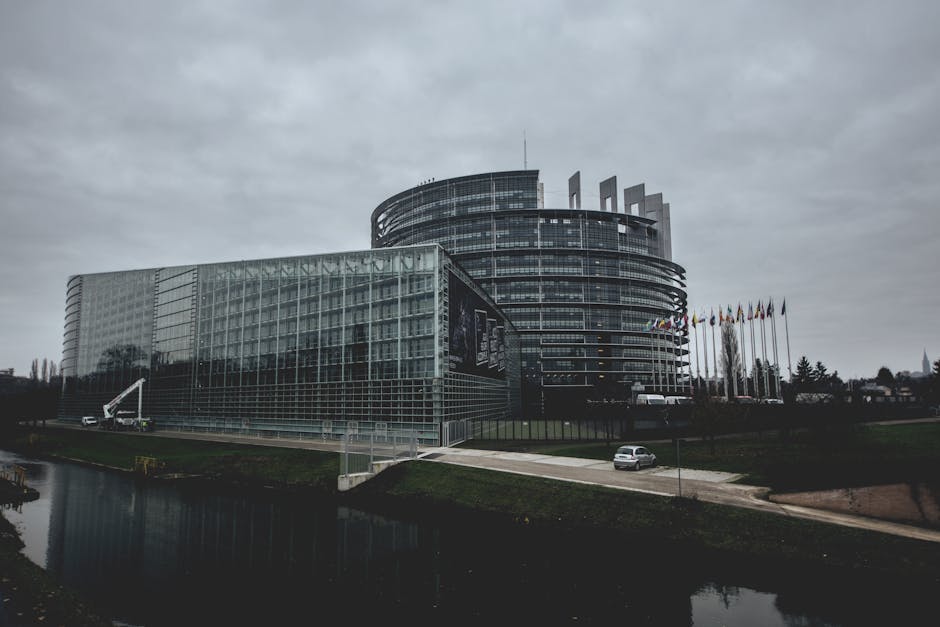
Photo: Artur Roman
Europe is quietly heading toward a debt crisis that won't arrive all at once. It will arrive as pension systems that can't keep up, defence budgets that can't be cut, and energy costs that won't come down without massive investment. The IMF put a number on it this week: if European governments change nothing, the average EU country will carry debt equal to 130 percent of its entire annual economic output by 2040, roughly double where most stand today.
That figure came from a paper the IMF presented to EU finance ministers at an informal meeting in Nicosia on Saturday. The paper was blunt in a way international institutions don't always manage to be. "The 'muddling-through' approach that many countries have adopted so far is reaching its limits," it said. "Making changes in a piecemeal way, or tinkering at the margins, is likely to be inadequate."
Three bills arriving at once
The pressure comes from three directions converging at the same moment. Europe is aging fast, so pension costs will climb even as the working-age population that funds them shrinks. The continent has committed to weaning itself off Russian energy, which requires enormous infrastructure spending. And the security environment has shifted sharply enough that defence budgets across the bloc are expanding after decades of cuts.
Any one of these would be manageable. All three together, over 15 years, is the problem.
The IMF's recommended fix has several layers. Governments should reform pensions and raise retirement ages to keep the systems solvent. They should make it genuinely easier for workers to move across borders within the EU to fill jobs where they're needed. They should integrate energy markets so electricity prices converge across the bloc instead of being set country by country. They should connect capital markets so that savings sitting in one country can fund growth projects in another.
All of that is complicated but not, in principle, impossible.
The politically explosive piece is the last one: joint borrowing. The IMF is recommending that EU countries treat innovation, energy infrastructure, and defence as shared European goods and fund them through shared European debt.
The borrowing question that divides the bloc
This is not a new argument in Brussels, but it remains genuinely unresolved. France, Italy, and Spain have generally supported the idea, partly because shared EU debt would carry lower interest rates than their own national bonds. Germany and several northern European countries have opposed it just as consistently, worried about underwriting the fiscal choices of governments they don't control.
Kyriakos Pierrakakis, who chairs the meetings of eurozone finance ministers, acknowledged the split without pretending it was close to being bridged. "This is one of those areas where there are differences of opinion," he told Reuters, "but it's certainly one of the areas which we will be discussing in the coming months."
The IMF's own position is carefully calibrated: even with ambitious reforms, most EU countries will still need to cut spending or raise taxes to bring debt onto a declining path. The more reform they manage, the less painful that fiscal squeeze needs to be. But there is no path in the IMF's analysis where reform alone is enough to avoid some consolidation.
What makes this more than a Brussels negotiating story is the timeline. Fifteen years sounds like a long horizon until you consider that pension reforms take a decade to show up in the budget, energy infrastructure takes years to build, and the political will to act tends to shrink as the crisis feels distant. The IMF's warning is essentially that the window for a managed, strategic response is open now and won't stay open indefinitely.
Debt at 130 percent of GDP does not mean automatic collapse. But it means a government with very little room to respond to the next shock, whether that shock is a pandemic, a war, a recession, or all three.