Lilly may pay $2 billion for psychedelic drugs, and the sector is changing

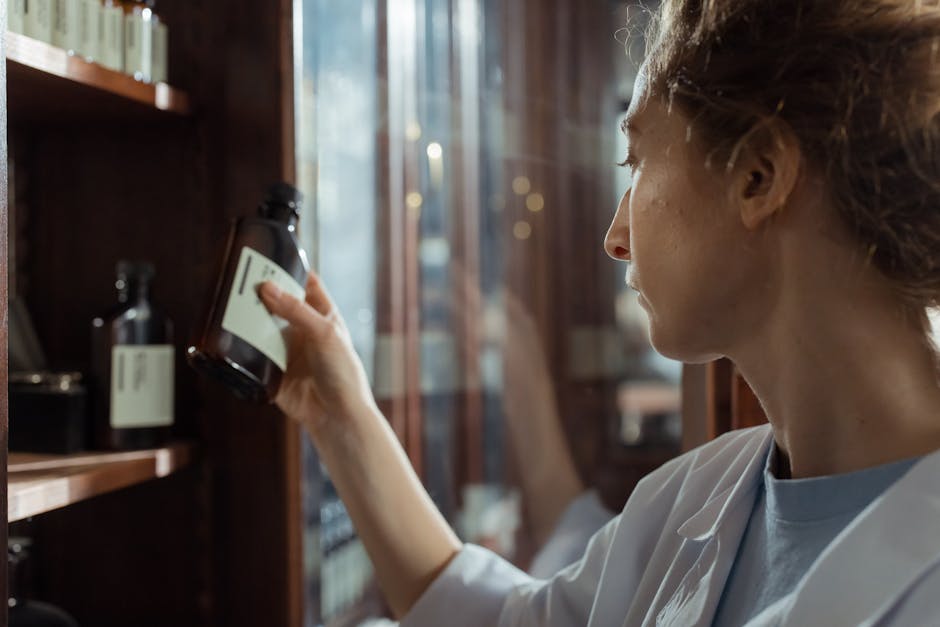
Photo: Artem Podrez
Eli Lilly is reportedly in talks to acquire AtaiBeckley, a psychedelic drug developer valued at nearly $2 billion, and Wall Street is already treating the deal as a signal that psychedelic medicine is no longer a fringe bet.
AtaiBeckley's shares jumped 50% before the market opened Thursday, after Bloomberg News reported late Wednesday that Lilly was negotiating an acquisition at a premium, possibly closing as soon as this week. BMO Capital Markets analyst Evan Seigerman said the deal "could reach more than $2 billion," but added that competing interest from other pharmaceutical companies could push the price higher still.
What AtaiBeckley actually does
The company is developing BPL-003, a drug delivered through a nasal spray that uses 5-MeO-DMT, a psychedelic compound, to treat depression that hasn't responded to conventional antidepressants. That condition, treatment-resistant depression, affects millions of Americans who have cycled through multiple medications without relief. For them, this research isn't an abstract pharmaceutical bet. It's the possibility of something that finally works.
Lilly, already one of the world's largest drugmakers and better known right now for its weight-loss drugs, has been pushing aggressively into brain and nervous system disorders. Its $7.8 billion acquisition of Centessa Pharmaceuticals, a sleep-disorder drugmaker, was the most visible move. Buying AtaiBeckley would extend that strategy into territory that, until recently, most major pharmaceutical companies wouldn't have touched.
Why now
The timing matters. In April, President Trump signed an executive order directing federal agencies to speed up access to psychedelic-based treatments. Analysts and health experts said the order was expected to shorten regulatory review timelines and attract more investment to the sector. That's exactly what happened. AtaiBeckley's stock had already gained 31% this year before Thursday's surge.
The broader psychedelic drug sector moved sharply higher on the news. Compass Pathways gained 7%, GH Research jumped 15%, Definium Therapeutics climbed 6%, and Enveric Biosciences rose 3%. RBC Capital Markets analyst Brian Abrahams said the sector "is likely to continue its rally and is poised to emerge into the mainstream."
That phrase, "into the mainstream," is doing real work here. A few years ago, psychedelic-based medicine lived almost entirely in academic research and small clinical trials. Now one of the most powerful pharmaceutical companies on earth is reportedly writing a billion-dollar check for it.
What this means beyond the stock price
For patients, a Lilly acquisition would mean AtaiBeckley's pipeline gains access to Lilly's clinical trial infrastructure, regulatory relationships, and distribution reach. That could accelerate the path to an approved drug, or it could mean the program gets absorbed into a larger portfolio and moves at whatever pace suits Lilly's priorities. Large acquisitions don't guarantee faster cures. They guarantee that the science gets resourced, which is a necessary but not sufficient condition.
For the mental health treatment landscape more broadly, the signal is harder to miss. Major pharmaceutical investment tends to follow regulatory momentum, and the executive order created that momentum. If Lilly closes this deal at a price above $2 billion, it sets a valuation benchmark for every other psychedelic drug company now in development, and makes it easier for those companies to raise capital and run larger trials.
The deeper pattern is that American mental health treatment has been largely stuck for decades. Antidepressants approved in the 1980s and 1990s still dominate prescribing. For people they help, that's fine. For the roughly 30% of depression patients who don't respond adequately to those drugs, the existing toolkit has felt exhausted. Psychedelic-based therapies represent a genuinely different mechanism, and the science, while still early, is serious enough that Lilly is willing to spend billions to own a piece of it.
Lilly and AtaiBeckley had not commented as of the Reuters report.