TeraWulf just signed a $19 billion Anthropic lease, and Kentucky wins big

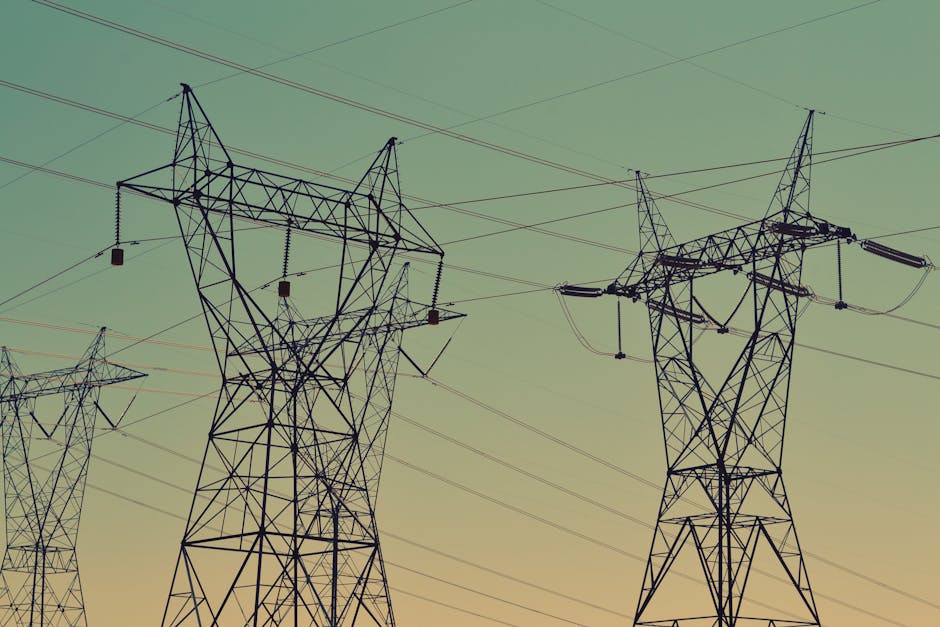
Photo: panumas nikhomkhai
TeraWulf just signed a $19 billion lease with Anthropic, and the deal is less about cryptocurrency than it is about where artificial intelligence gets built, and who gets paid to house it.
The company, which started as a bitcoin miner, announced Monday that it would develop a purpose-built AI data center campus at its Justified Data site in Hawesville, Kentucky. Anthropic, the AI lab behind the Claude family of models, will lease that infrastructure for 20 years. The contracted revenue over that span is expected to reach $19 billion. TeraWulf's shares jumped more than 10% on the news.
From mining bitcoin to housing AI
The pivot is not sudden. TeraWulf said in May that AI infrastructure would increasingly drive its business, and this deal locks in that direction for two decades. Bitcoin mining is a volatile business: revenue swings with the price of a coin, with the difficulty of the computation, and with electricity costs. A 20-year lease with a well-capitalized AI company is the opposite of that. It is recurring, contracted, predictable revenue, the kind that attracts long-term investors and supports major capital spending.
To fund the shift, TeraWulf also announced it is selling its 50.1% stake in a separate joint venture called Abernathy to an investor group led by partner Fluidstack. The company described that sale as monetizing roughly $450 million in invested capital at a premium, freeing up money to invest in wholly owned projects like the Hawesville campus.
What gets built, and when
The Hawesville campus will support about 401 megawatts of critical computing power. That is a large facility. A single megawatt of data center capacity is enough to run thousands of servers, and 401 megawatts puts this campus in the tier of serious hyperscale infrastructure. Initial capacity is expected to come online in the second half of 2027, with the full campus operational by early 2028.
That timeline matters. The AI industry is in the middle of a massive race to secure computing infrastructure, and lead times for power, construction, and equipment are long. Anthropic is effectively locking in a significant block of capacity years in advance, paying for certainty in a market where certainty is scarce.
The Kentucky angle
Hawesville, Kentucky is not a technology hub by conventional definition. It is a small city in western Kentucky, historically tied to aluminum production and manufacturing. Data centers tend to go where land is cheap, power is available, and local governments offer incentives. For communities like Hawesville, a 20-year, multi-hundred-megawatt facility represents exactly the kind of anchor investment that brings construction jobs, then operations jobs, then tax revenue for a generation.
That is the part of this story that does not show up in the stock price. TeraWulf's shares have gained roughly 85% year to date before this announcement, reflecting the market's broader enthusiasm for anything connected to AI infrastructure. But behind those numbers is a physical campus that someone has to build, staff, and power, in a specific place, for a long time.
The bigger pattern
What TeraWulf is doing is part of a wider structural shift. Bitcoin miners built out massive electrical infrastructure over the past decade, often in rural areas with cheap power. As AI demand for compute has exploded, those same sites, with their power connections, land, and cooling capacity, have become attractive raw material for a different industry entirely. Several miners have made similar pivots, betting that landlording for AI is more durable than competing in an increasingly industrialized mining market.
Whether $19 billion over 20 years fully materializes depends on Anthropic's own trajectory, the pace of AI adoption, and whether the economics of the deal hold through multiple technology cycles. But the structure, a long-term lease with contracted revenue, is designed precisely to reduce those risks for TeraWulf. For Hawesville, the bet is simpler: the machines are coming, and they will run for a long time.