Albertsons just cut its profit forecast by 20% and shoppers are why
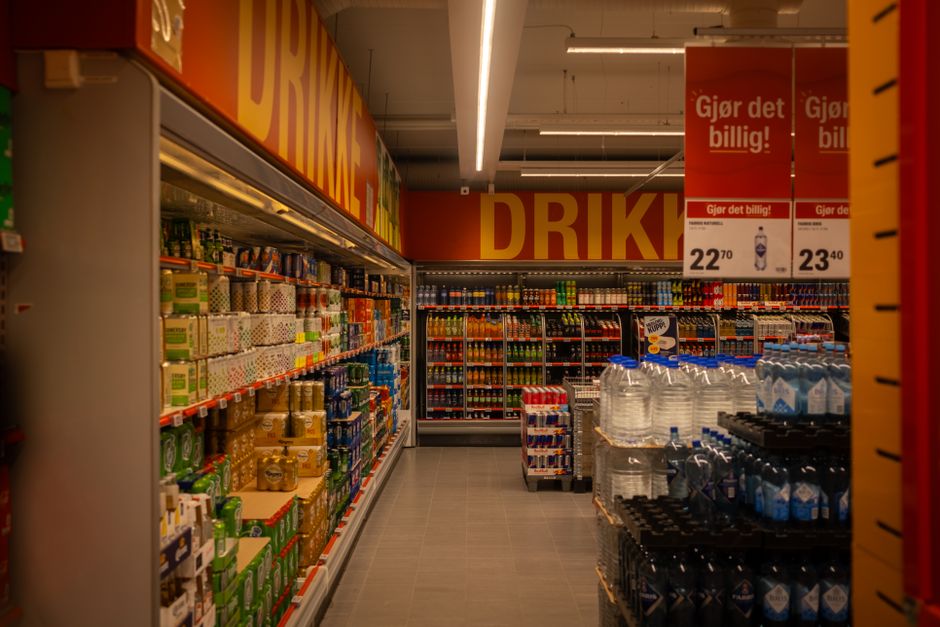
Photo: Fabnel LDN
Albertsons, one of the largest grocery chains in the country, told investors on Thursday that it expects to earn significantly less money this year than it promised three months ago. Its stock fell as much as 24.5% in a single session, on pace for its worst day ever. The reason is not a supply chain failure or a bad acquisition. It is shoppers.
Specifically, it is shoppers who are running out of room.
What changed
The company now expects annual earnings per share of $1.75 to $1.85. Its earlier target was $2.22 to $2.32, a cut of roughly 20%. It also expects same-store sales to decline between 0.5% and 1.5% for the year, after previously projecting flat to slightly positive growth.
CEO Susan Morris was direct about why. "Core grocery faced increasing pressure from softer industry unit trends and a more cautious consumer," she said. On the earnings call, she identified the "biggest leakage" of lower-income customers going to Walmart and Amazon, both of which have been investing heavily to keep prices low.
The word leakage is telling. It is not that Albertsons raised prices and people got angry. It is that shoppers, squeezed by higher gas and food costs, are making cold calculations about where their dollar goes furthest. And increasingly, that calculation points away from traditional mid-market grocery chains.
How this lands on ordinary life
There are a few ways to read this news.
The first is as a straightforward competitive story. Walmart and Aldi are winning on price. Albertsons, which sits in the middle of the market, is caught between discount giants on one side and premium grocers on the other. That kind of squeeze is survivable but painful.
The second reading is more uncomfortable. Albertsons serves a lot of middle- and lower-income households. When those customers start trading down to the cheapest possible option, it usually means they have already absorbed as much cost pressure as they can. Higher gas prices, with U.S. pump prices potentially crossing $4 a gallon again according to Reuters, eat into the grocery budget directly. The war in Iran is expected to push fuel and packaging costs higher through the rest of the year.
Albertsons says it is not passing those higher costs to consumers right now. It is negotiating with suppliers and cutting prices on hundreds of items instead. That sounds like good news for shoppers in the short term. But it also explains why the profit forecast just dropped by a fifth.
Who else is exposed
The damage did not stay inside Albertsons. Kroger shares fell about 3% on Thursday. Sprouts Farmers Market fell roughly 1%. Evercore ISI analyst Michael Montani noted that "industry trends and competition remain challenging for Kroger and Sprouts Farmers Market" as well. When the second-largest grocer in the country cuts its outlook this sharply, the signal travels.
Albertsons is also losing its chief financial officer, Sharon McCollam, to retirement later this year. RBC Capital Markets analyst Steven Shemesh called her "very well-regarded by the investment community" and flagged the timing as a concern given the company's current challenges. Replacing a trusted finance chief while restructuring from 11 divisions into four regional units, and investing in e-commerce, and absorbing rising input costs, is a lot to manage at once.
The bigger pattern
What Albertsons is describing is not unique to its stores. It is what happens when inflation persists long enough that middle-income households stop thinking of themselves as middle-income. They start shopping like they are one unexpected bill away from a problem, because many of them are.
Traditional grocery chains were built around a customer who had modest but reliable spending flexibility. That customer is not gone, but they are more careful now. And careful shoppers sort ruthlessly by price in a way that punishes the middle of any market. The question is whether pressure like this eases if gas prices stabilize, or whether a new baseline of caution has already been set.