American farmers just got a $17 billion lifeline from China
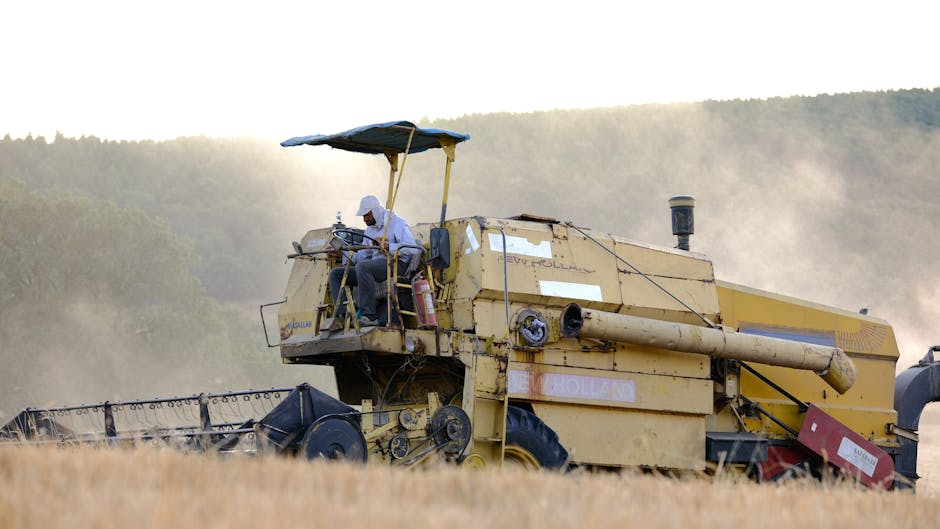
Photo: Aydın Photography
American farmers spent 2025 watching one of their biggest customers walk away. Now that customer is coming back — and promising to stay for at least three years.
The White House announced Sunday that China has committed to purchasing at least $17 billion in U.S. agricultural products annually in 2026, 2027, and 2028. The commitment was made during meetings between President Trump and Chinese President Xi Jinping last week, and it doesn't even count a separate soybean deal China agreed to back in October 2025.
To understand why this matters, you need to see how bad things got. Last year's escalating rounds of tit-for-tat tariffs gutted agricultural trade between the two countries. U.S. farm exports to China fell 65.7% year-on-year in 2025, collapsing to $8.4 billion — less than half of what this new commitment promises annually going forward.
How a decade of decoupling happened
The damage didn't start with last year's tariff fight. It started earlier and ran deeper.
In 2016, China sourced 41% of its soybeans from the United States. By 2024 — before Trump's second term even began — that share had dropped to roughly 20%. Over nearly a decade, China deliberately diversified its food supply chains, leaning harder on Brazil and Argentina and reducing the leverage American agriculture had over its purchasing decisions. That kind of structural shift doesn't reverse overnight, which is why a formal commitment like this one carries real weight: it's China agreeing, on paper, to put U.S. farmers back into its supply chain at scale.
The deal also includes some specific concessions. China will work with U.S. regulators to lift suspensions on American beef facilities and resume poultry imports from states cleared of bird flu — two categories where trade had been blocked by a combination of food safety disputes and disease outbreaks.
Who wins, and what comes next
The most direct winners are American commodity farmers — particularly soybean, corn, and wheat growers in states like Iowa, Illinois, and Kansas — who saw prices and demand crater when China pulled back. A guaranteed floor of $17 billion a year in purchases provides the kind of visibility that lets farmers plan planting seasons and capital investments with some confidence.
The broader framework is still being built. The White House says the two governments will establish a U.S.-China Board of Trade and a U.S.-China Board of Investment to work through market access disputes and manage trade under what Chinese Foreign Minister Wang Yi described as "a reciprocal tariff-reduction framework." In plain terms: the two sides are setting up standing institutions to negotiate rather than defaulting to escalation every time a dispute flares up. That structure, if it holds, matters as much as any single purchase figure.
The honest caveat is that a commitment is not yet a contract. China made large purchase pledges during Trump's first term under the so-called Phase One trade deal signed in 2020 — and fell well short of its targets. Whether $17 billion actually arrives on U.S. docks will depend on whether the tariff environment stays stable enough for Chinese buyers to make the economics work, and whether the new trade boards can resolve the beef and poultry access issues that have stalled progress before.
What's different this time is the starting point. Trade fell so far in 2025 — to $8.4 billion — that even a partial return to the commitment level would represent a near-doubling of business. For farm country, that's not a small thing.