Bangladesh is trying to restart its factories before they go dark for good
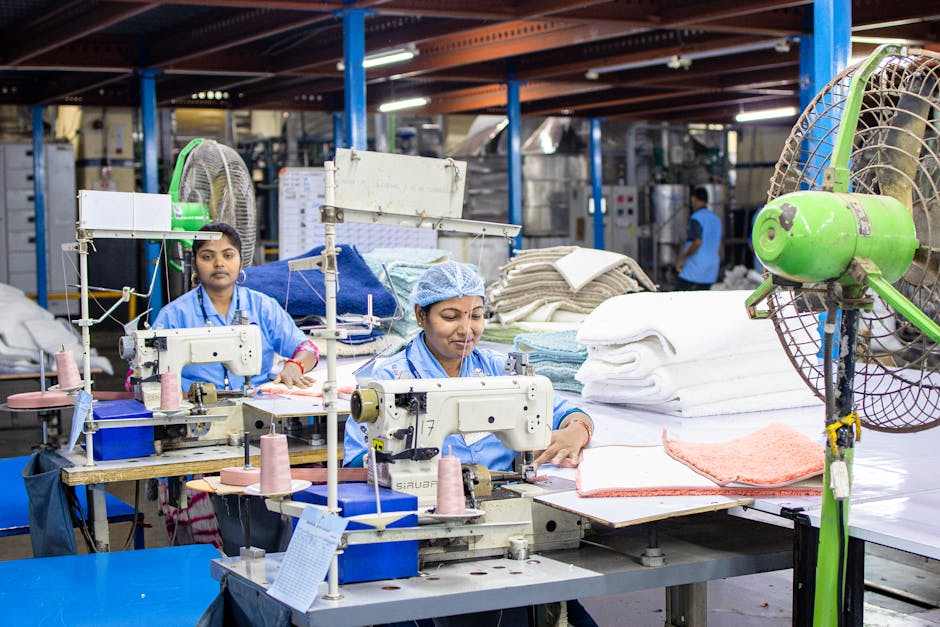
Photo: EqualStock IN
Hundreds of garment factories in Bangladesh have gone quiet. Workers have been sent home. And the country that makes a significant share of the world's clothing is now racing to reverse a slowdown before it becomes something harder to fix.
Bangladesh's central bank announced a 600 billion taka stimulus package on Saturday, worth roughly $4.9 billion, aimed at reopening closed factories, supporting distressed businesses, and restoring enough confidence in the economy to get production moving again.
The package has two parts. About 410 billion taka will come from commercial banks that currently have more money sitting idle than they can lend out. The central bank will take those funds as long-term deposits, paying 10% interest, and redirect them into the economy. The remaining 190 billion taka comes from the central bank's own balance sheet, backed by a government guarantee.
The biggest single allocation, 200 billion taka, goes directly toward reopening shuttered factories and supporting service businesses. Central bank governor Mostaqur Rahman estimates the program could help create around 250,000 jobs. Another 100 billion taka is set aside for agriculture and the rural economy.
Why garments, and why now
The garment sector is not one industry among many in Bangladesh. It accounts for more than 80% of the country's export earnings. When those factories slow down or close, the economic damage spreads fast: to workers, to rural families who depend on remittances, to the foreign currency reserves that keep imports affordable.
That pressure is building from several directions at once. Global demand for clothing has softened. Input costs have risen. Supply chains remain disrupted. And rising import bills, partly driven by geopolitical tensions in the Middle East, are squeezing the economy from another angle.
The numbers reflect all of that. Economic growth eased to 3% in the second quarter of the current fiscal year, down from 3.5% a year earlier, according to provisional figures from the Bangladesh Bureau of Statistics. That may not sound dramatic, but for a developing economy that needs strong growth to absorb a young and growing workforce, the trend is the problem as much as the level.
Businesses had been pushing for exactly this kind of intervention. High borrowing costs, persistent inflation, and tight credit conditions had already made it difficult to invest or expand. The fear was that idle factories, once they lose their workers and their supply relationships, don't simply restart when conditions improve. The costs of getting back to full production can be prohibitive. Inaction, in other words, has its own compounding price.
What this does and doesn't solve
Refinancing programs like this one work by lowering the cost of credit for targeted borrowers, making it easier for factory owners to service existing debts and take on new investment. If the money reaches struggling exporters quickly and at usable rates, it could stabilize employment and keep production lines running through a difficult stretch.
What it cannot fix is external demand. If buyers in Europe and North America are purchasing fewer clothes, cheaper financing in Dhaka doesn't change that. The stimulus is essentially a bridge: it keeps the industrial base intact while betting that global demand recovers before the damage becomes permanent.
The garment industry's concentration in Bangladesh also means that any stabilization effort carries geopolitical weight. Brands and retailers who source from Bangladesh have limited short-term alternatives at the same scale and cost. A prolonged contraction in Bangladeshi manufacturing would ripple into retail supply chains in ways that consumers in wealthier countries would eventually feel, not immediately, but in the form of tighter supply and higher prices on basics they rarely think about.
The deeper question is whether 600 billion taka is large enough to matter, and whether it reaches the factories that need it rather than the businesses best positioned to navigate the application process. Stimulus packages tend to work best when the problem is a temporary liquidity squeeze. They work less well when the underlying demand just isn't there.