Ciena sees 30% annual growth through 2029, if it can find the parts

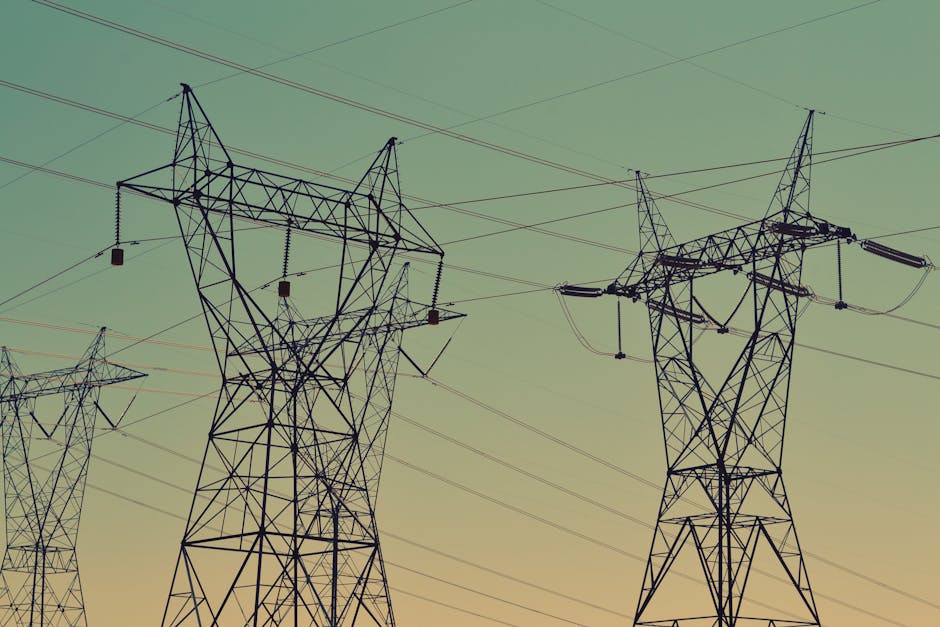
Photo: panumas nikhomkhai
Ciena just told investors it expects its revenue to grow roughly 30% per year through 2029, and the stock climbed on the news. The catch, which management acknowledged in the same breath: supply constraints are continuing.
That tension is the whole story.
Ciena makes the optical networking gear that carries data at high speed across fiber cables. It is not a household name, but it sits at a critical junction in the infrastructure that makes cloud computing, streaming, and increasingly AI work at scale. When a hyperscaler like a major cloud provider needs to move enormous amounts of data between its data centers, Ciena's equipment is often what makes that possible.
The targets are ambitious
The company set out a three-year financial roadmap at an investor briefing this week. From 2026 through 2029, it expects compound annual revenue growth of approximately 30%, with an adjusted gross margin of around 50%. Gross margin, in plain terms, is the share of each dollar of revenue the company keeps after paying for the direct costs of making its products. A 50% margin in hardware manufacturing is healthy, and signals the company believes it can hold pricing power even as it scales.
Thirty percent annual growth compounded over three years is not a modest claim. It implies roughly doubling revenue in that window. Wall Street rewarded the announcement with a stock price climb, though the source material does not specify by how much.
The supply problem is real
The complication is that Ciena cannot sell what it cannot build, and right now it cannot build as fast as customers want to buy. Management explicitly flagged that supply constraints are continuing, an acknowledgment that the gap between order demand and actual shipments has not closed.
This is a familiar bind in the semiconductor and networking hardware world. The components that go into high-speed optical gear, including specialized chips, are in heavy demand from multiple industries at once. AI infrastructure buildouts have accelerated spending on exactly this category of equipment, which is good for Ciena's order books and difficult for its production lines simultaneously.
The practical consequence is a growing backlog. When a company says it expects 30% annual growth but also says it cannot fully satisfy current demand, what it is really saying is that the growth ceiling is being set by supply, not by customers. If the supply situation eases, the targets become more reachable. If it does not, the ambitious three-year plan runs into a hard physical limit.
Why this matters beyond the stock price
Ciena's situation reflects something broader about where the economy is right now. The infrastructure required to support AI is not just servers and software. It is fiber cables, optical transceivers, specialized routers, and the gear that Ciena makes. Demand for all of it is climbing fast, and the industrial base needed to produce it is struggling to keep up.
That gap between demand and production capacity has real downstream effects. Data centers get built on slower timelines. Cloud services expand more gradually than providers want. And the companies competing to offer AI tools, from startups to large technology firms, are constrained by physical infrastructure that takes years and substantial capital to bring online.
Ciena's investor day targets are essentially a forecast that this supply problem gets solved, or at least meaningfully improved, over the next three years. The 30% growth figure is the optimistic scenario. Whether it arrives on schedule will depend on parts availability and manufacturing capacity as much as on customer demand, which by all indications is not the problem.
For now, the company has demand it cannot fully serve and a long runway of infrastructure spending ahead of it. That combination is why the stock moved. Whether the supply side catches up is the question the next three years will answer.