Duke Energy just gave up its offshore wind lease for $129 million in fossil fuels

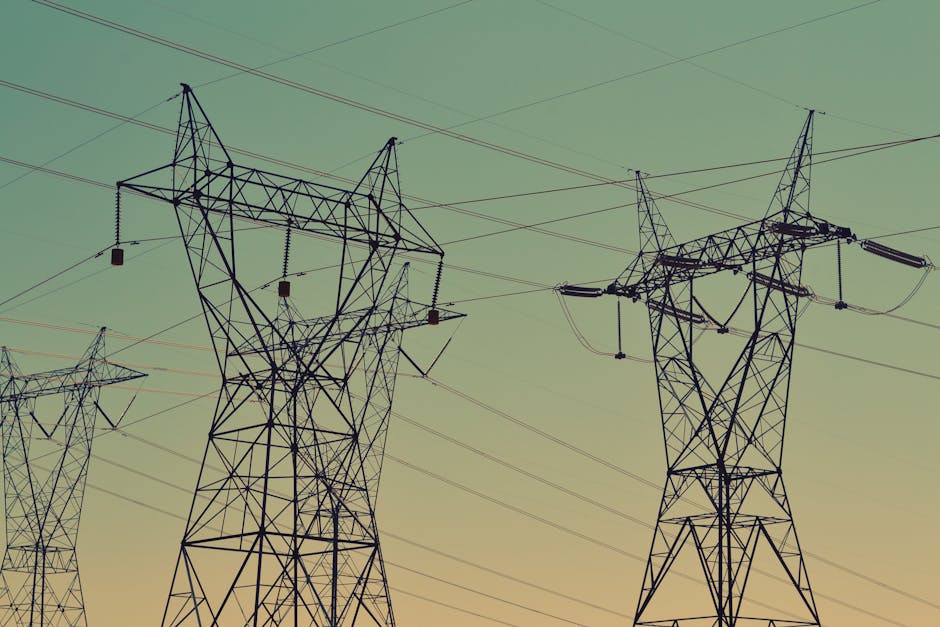
Photo: gong qianlan
Duke Energy just surrendered its offshore wind lease off the Carolina coast, and the Trump administration got exactly what it wanted: another renewable energy commitment converted into a promise to build fossil fuel capacity instead.
The deal, announced Monday by the U.S. Department of the Interior, requires Duke to reinvest nearly $129 million in new electric power capacity across the Carolinas. Duke says it is weighing natural gas generation and nuclear power, along with grid upgrades. What it is not building is the offshore wind farm it had been licensed to develop in the Carolina Long Bay area.
This is not an isolated decision. The Trump administration has now struck similar agreements with multiple power companies this year, trading lease terminations for pledged investments in fossil fuel-fired electricity. Duke's deal is the latest example of a deliberate federal strategy to pull capital out of offshore wind and redirect it toward gas and, to a lesser extent, nuclear.
What this means for Carolinians
For people who live and pay electric bills in North Carolina and South Carolina, the near-term consequences are subtle but real. The offshore wind project would have added electricity supply to a regional grid that, like most of the country, is under growing strain from data centers, manufacturing expansion, and electrification of homes and cars. More supply generally means more competitive pricing and greater reliability. Canceling a project doesn't remove that future capacity instantly, but it does delay it, and delays in power infrastructure tend to show up eventually in rates.
Natural gas generation is cheaper to build quickly than offshore wind, but it exposes ratepayers to fuel price swings. Gas prices have been volatile over the past five years, and utilities that lock into gas capacity pass that volatility along through the rates they charge customers. Nuclear power, which Duke is also considering, is virtually emissions-free and produces stable, predictable electricity, but it is extremely expensive to build and takes a decade or more to bring online.
The $129 million Duke is committing is not a small number for a regional investment, but it is modest relative to what a utility-scale offshore wind project would have cost and generated. The tradeoff the administration is engineering is speed and fossil fuel alignment now, in exchange for forgoing a larger, cleaner, longer-lived asset later.
The bigger shift
What is happening across the U.S. offshore wind sector is a structural reversal, not just a policy wobble. The federal government controls the leases that allow companies to develop wind energy in federal waters. When the administration offers companies a way out of those leases in exchange for fossil fuel pledges, it is using that control to reshape the country's energy mix directly, without waiting for Congress.
The companies agreeing to these deals are not necessarily ideologically aligned with the administration's energy preferences. They are responding to regulatory risk. Offshore wind projects require years of federal permitting and cooperation. If a company believes the current administration will slow-walk or block that process anyway, surrendering the lease and taking a guaranteed investment agreement starts to look like the rational move.
That calculation, repeated across enough utilities, adds up to a significant slowdown in U.S. offshore wind development at a moment when coastal states like North Carolina had been counting on it to meet clean energy targets and manage future electricity demand.
The long-run cost of that slowdown will fall on ratepayers and on communities that were expecting the jobs and tax revenue that come with large-scale energy construction. It will not appear on anyone's electric bill this month. But it is being written into the system right now.
Related Posts





Recent


Oct 10, 2026