GM and Lockheed just partnered to build weapons, and it shows how depleted the US arsenal is
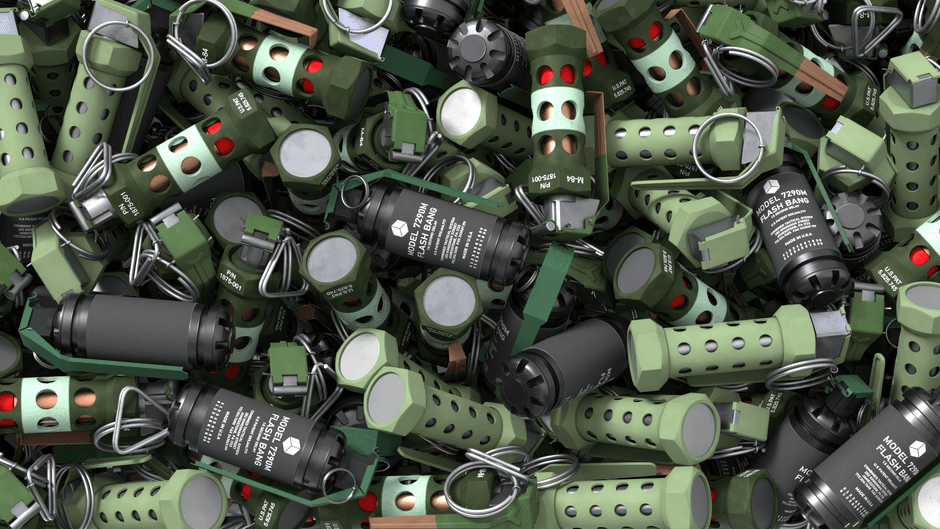
Photo: Aleksandr Yask
General Motors and Lockheed Martin announced Tuesday that they are formally collaborating on defense manufacturing, and the partnership is a blunt signal about the state of American weapons stockpiles. The U.S.-Iran war and years of supplies sent to Ukraine have drained the country's arsenal, and Washington has run out of patience waiting for traditional defense contractors to catch up on their own.
The two companies, with the U.S. Department of Defense facilitating the arrangement, said they will focus on three things: getting production facilities ready faster, shoring up supply chains, and applying advanced manufacturing techniques to squeeze out more output. They haven't said yet which specific weapons components GM will make. But the direction is clear: automakers have massive factory floors, precision manufacturing expertise, and supply-chain relationships that the defense sector badly needs right now.
Why an automaker, and why now
GM isn't a stranger to wartime production. During World War II, the company converted its plants to build tanks, aircraft engines, and artillery shells. What's different today is that this isn't a wartime emergency conversion. It's a structural acknowledgment that America's defense industrial base, the network of companies that design and build weapons, cannot meet current demand on its own.
Solid rocket motors, igniters, and guidance systems are among the most constrained components in the system, according to a White House memo made public Tuesday. President Trump invoked the Defense Production Act on June 11, citing "limited production capacity, fragile supply chains, long-lead dependencies, and related production bottlenecks." The act allows the president to direct private industry to prioritize national defense needs through voluntary agreements, which is exactly what the GM-Lockheed partnership represents.
The Trump administration also planned to meet this month with executives from the country's largest defense contractors to discuss accelerating production.
What this means beyond the factory floor
For ordinary Americans, the most direct consequence isn't at the pump or the grocery store. It's about national security capacity and the cost of rebuilding it. When stockpiles run low, the U.S. has less leverage in geopolitical standoffs, less ability to supply allies, and more pressure to spend quickly to restock, typically at higher cost.
Lockheed is already committing $9 billion through 2030 to scale munitions production and upgrade its facilities. GM is spending $9 billion in capital and $7 billion in research and development across its overall business this year, though it hasn't broken out how much of that flows to its defense unit. Neither company has named a dollar figure for this specific partnership.
GM isn't alone among automakers edging toward defense. Ford has said several governments in Europe and North America have approached the company about how its products can support their defense departments.
The deeper story here is a structural one. For decades, the U.S. relied on a relatively small cluster of specialized defense contractors to handle weapons production. That model worked when demand was steady and predictable. Two major sustained conflicts, along with the cost and complexity of modern precision weapons, have exposed the limits of that model. Bringing in industrial manufacturers with spare capacity and process expertise isn't a stopgap. It may be the beginning of a lasting reorganization of who builds America's weapons and how fast they can scale.
Whether GM and Lockheed turn this partnership into meaningful output at speed is the question that actually matters. They say the collaboration is just getting started. The Pentagon clearly can't afford for it to stay that way.