Jabil beat its numbers and investors still sold the stock

Photo: Freek Wolsink
Jabil just delivered a quarter that most companies would celebrate, and its stock dropped anyway. That gap between solid fundamentals and a falling share price tells you something real about where investor sentiment sits right now.
The company, a massive contract manufacturer that builds hardware for Apple and the data centers powering AI, beat its fourth-quarter results and issued a fiscal 2027 revenue and profit forecast above what analysts had expected. The reward was a roughly 3% drop in premarket trading.
What Jabil actually does
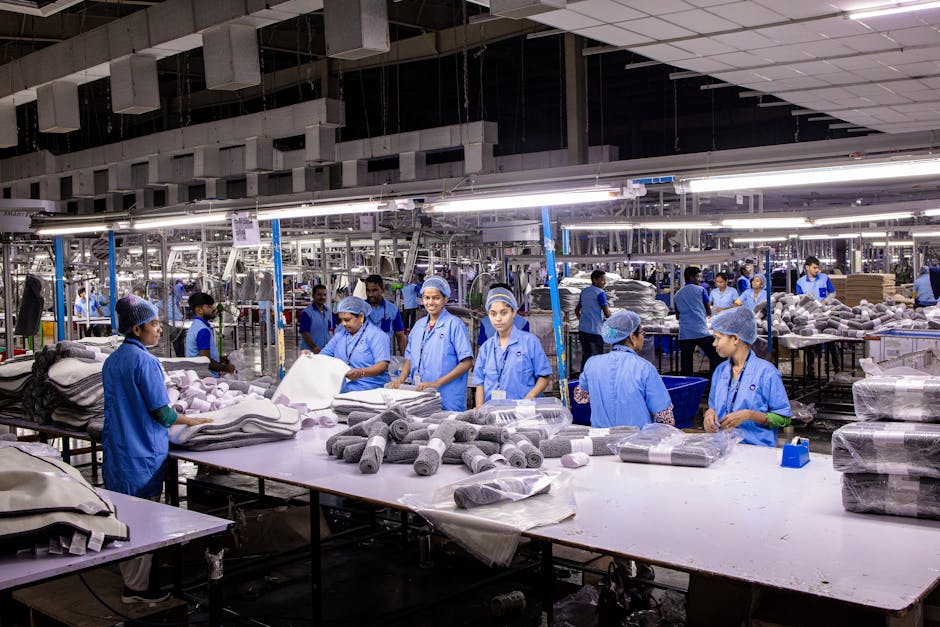
Most people have never heard of Jabil, but they've almost certainly used something it built. Contract manufacturers like Jabil sit behind the brands you recognize. When Apple needs iPhones assembled, when hyperscalers like Google or Microsoft need the physical servers that run AI models, companies like Jabil handle the production. They are the industrial backbone of the digital economy, and their order books are among the clearest early signals of where hardware spending is actually going.
That makes the AI infrastructure angle significant. Demand for the physical equipment that runs large language models and data-intensive workloads has been one of the few genuinely bright spots in manufacturing over the past two years. Jabil's results suggest that demand is still real enough to move its numbers.
Why the market shrugged
The 3% drop is a familiar pattern in a market that has, in many cases, already priced in good news before it arrives. When a stock has run up on expectations of strong AI-related demand, an earnings beat confirms the story rather than advancing it. Investors who bought on the expectation of a good quarter have less reason to stay once the good quarter actually shows up.
There is also a broader anxiety baked into any manufacturing story right now. Supply chains are still being rerouted around tariffs and geopolitical friction. A company that builds things in multiple countries for global clients carries a kind of exposure that is hard to model precisely. Even a strong outlook can feel fragile when the trade environment could shift in a quarter.
That said, the fact that Jabil guided above estimates for fiscal 2027 is not nothing. Contract manufacturers tend to be conservative in their forward projections because they are working off actual purchase commitments from clients. When they say revenue and adjusted earnings will be higher than Wall Street expected, it usually reflects real orders, not optimism.
The bigger picture
What this moment illustrates is the strange position that AI infrastructure suppliers now occupy. The investment cycle in AI hardware is enormous, and companies positioned in that supply chain are genuinely benefiting. But markets have been rewarding that story for long enough that a clean beat no longer moves the needle the way it once would have.
For ordinary workers and communities tied to manufacturing, Jabil's results are a quieter kind of signal. Strong order flow in AI-related hardware means factories stay busy, shifts stay staffed, and capital keeps flowing into physical production rather than retreating to pure software. That matters in ways that share price moves on a single morning do not fully capture.
The stock reaction is a market story. The underlying demand is an economy story. On Wednesday, they pointed in opposite directions.