Shield AI has crashed its $1M drone 50+ times and Wall Street just valued it at $13B
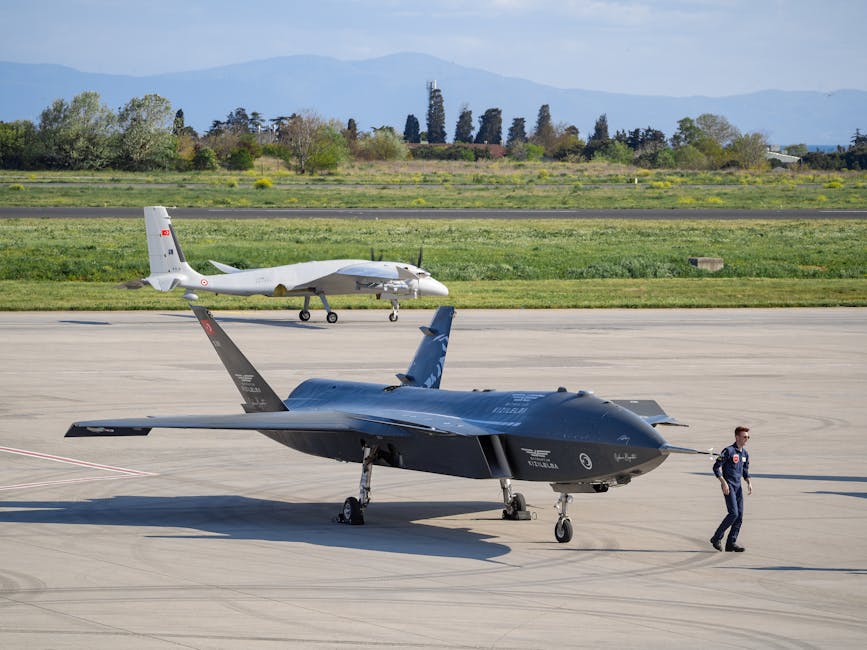
Photo: Osman Özavcı
Shield AI just raised money at a $12.7 billion valuation, with JPMorgan co-leading the round. Its flagship drone has crashed more than 50 times in the past 18 months. And on May 12, a Romanian Navy official had two fingers severed and a third fractured when her hand was caught in a V-BAT propeller during a training exercise off the Texas coast.
It was not the first time.
A U.S. Navy official suffered a nearly identical injury during an earlier test of the same drone. After that incident, Shield AI's then-CEO Ryan Tseng told Forbes the company had addressed safety concerns with new landing gear and warning stickers. "The aircraft is, tip to tail, just a radically better airplane," he said. Less than a year later, the Romanian officer was flown to the University Medical Center New Orleans for two surgeries to reattach her fingers, then transferred to Walter Reed National Military Medical Center in Maryland, where she remained as of May 25, according to Romania's Ministry of National Defence.
Shield AI says the May 12 incident was caused by a violation of established safety procedures, not a product defect. Romania's navy says its $30 million contract with the company remains in effect and that an investigation is ongoing.
What the reporting found
Reuters spoke with 21 former employees, industry executives, and investors, and reviewed a whistleblower complaint filed in May to the Department of Labor, plus a lawsuit related to hostile work environments at the company. The picture that emerges is of a company straining to sell technology that is not yet ready for what it's being sold as.
The V-BAT, a vertical takeoff-and-landing drone designed for military use, costs roughly $1 million per unit. Shield AI acquired it when it bought Martin UAV in 2021. According to the sources Reuters interviewed, several employees who raised safety concerns were dismissed. A Cessna carrying a Shield AI employee and his child had to take evasive action to avoid a mid-air collision with a V-BAT. And the whistleblower complaint alleges the company obscured technical flaws in the drone to help win military contracts.
Shield AI declined to make its current CEO, Gary Steele, available for comment. In a statement, the company said it had a strong safety record and that "operational mishaps are common" for a drone like the V-BAT. It noted the aircraft has accumulated 18,000 flight hours since 2019.
Why this matters beyond one company
Shield AI is not a fringe player. In February, Vice President JD Vance toured Armenia and was shown a new V-BAT model sold under Washington's first arms deal with the country. "Holy shit. Look at this thing," Vance said in a video posted on LinkedIn. "It's going to do great things for you guys."
That moment captures the stakes. The Pentagon is in a race to rearm, drones are central to how wars are now fought in Ukraine and potentially over Taiwan, and Silicon Valley startups are positioning themselves as the faster, leaner alternative to legacy defense contractors. The pitch is compelling. The pressure to close contracts, hit milestones, and justify sky-high valuations is immense.
That pressure is exactly what whistleblower complaints tend to describe when they describe corners being cut.
Defense procurement has always carried the risk of buying capability that exists more on paper than in the field. What's different now is the speed. The money is moving faster than the technology in some cases, and when the technology involves autonomous aircraft operating near human bodies, the gap between the pitch deck and the flight line has real consequences.
A $12.7 billion valuation does not mean a product works. It means investors believe it will. The Romanian officer now at Walter Reed is a reminder that the distance between those two things is not just financial.