Southwest Gas just bet $2.3 billion on Nevada's gas future

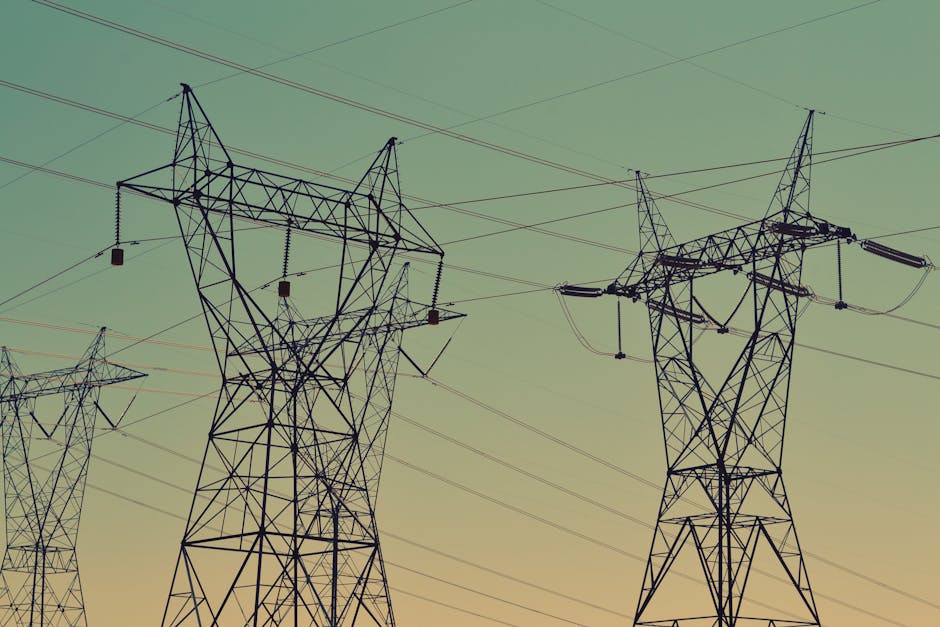
Photo: Fabian von Imhof
Southwest Gas just expanded its biggest infrastructure bet by $600 million, and the people most directly affected are the ones who heat their homes and run their businesses across Nevada, California, and Arizona.
The company's Great Basin 2028 Expansion Project, a new natural gas pipeline designed to move fuel through the interior West, was originally priced at $1.7 billion. Management now puts the price tag at $2.3 billion, and the reason for the increase is, on its face, a good sign: demand has grown faster than expected. Binding commitments from customers have reached roughly 1 billion cubic feet of gas per day, and another 1.8 billion cubic feet worth of interest has come in for phases running through 2035. Southwest Gas reported these figures alongside its second-quarter results on August 5.
Why this pipeline matters
Nevada is where this story is centered. The state is growing fast, driven by data centers, manufacturing, and population, and those industries need reliable energy. Natural gas pipelines are the physical infrastructure that makes that energy possible. When Southwest Gas locks in binding contracts for a billion cubic feet a day, that's not a speculative bet. Those are customers who have already committed.
Once the pipeline is running in 2028, the company projects it will generate between $270 million and $300 million in annual margin on that $2.3 billion investment. Regulators across all three states have been broadly cooperative. California's utility commission approved rate adjustments adding roughly $40 million in annual revenue. Nevada signed off on a resource plan covering about $186 million in capital spending. Arizona launched a new mechanism, effective April 1 this year, that lets Southwest Gas recover safety and reliability spending faster, up to a $50 million annual cap.
For customers, regulatory cooperation is a double-edged thing. Faster approvals mean infrastructure gets built. But the cost of that infrastructure eventually shows up in monthly bills, because utilities recover capital spending through the rates they charge.
The parts of the story that are harder to spin
Strip away the pipeline excitement, and the underlying gas distribution business is quietly shrinking on some measures. The core segment, the one that pipes gas to homes and businesses today, contributed $40.8 million to net income this quarter, down from $45.6 million a year ago. Adjusted figures tell a similar story, falling from $33.7 million to $31 million.
This is partly mechanical. When a utility spends heavily on new infrastructure, depreciation costs rise before the new rates kick in to cover them. Southwest Gas put $520 million into its network in the first six months of 2026 alone, including $115 million specifically toward the Great Basin project. Depreciation rose 13% year over year as a result. The expenses are real now; the revenue from new rates comes later.
Other income also fell this quarter, down $9.4 million, because interest income dropped, gains on company-owned life insurance policies were smaller, and charitable contributions rose. And income tax expense climbed $16.2 million largely because a $12 million state tax benefit from last year didn't repeat.
The company ended the quarter with $270.5 million in cash and nearly $1 billion in available liquidity, so it isn't in a fragile position. But the gap between what the core business earns today and what the pipeline is supposed to earn in 2028 is real, and two years is a long time for costs to keep rising before new revenue arrives.
The bigger pattern
Southwest Gas is doing something a lot of American energy companies are doing right now: making large, long-duration infrastructure bets during a window when demand signals look strong. The logic is that the West needs more gas capacity, and whoever builds the pipes owns the margin. The risk is that a $2.3 billion project is not easy to unwind if demand forecasts shift, regulations tighten, or the timeline slips.
For people in Nevada especially, the outcome of this bet will shape how reliable and how expensive their energy is for the next decade.