TeraWulf just locked Google into a $19 billion AI bet on Kentucky

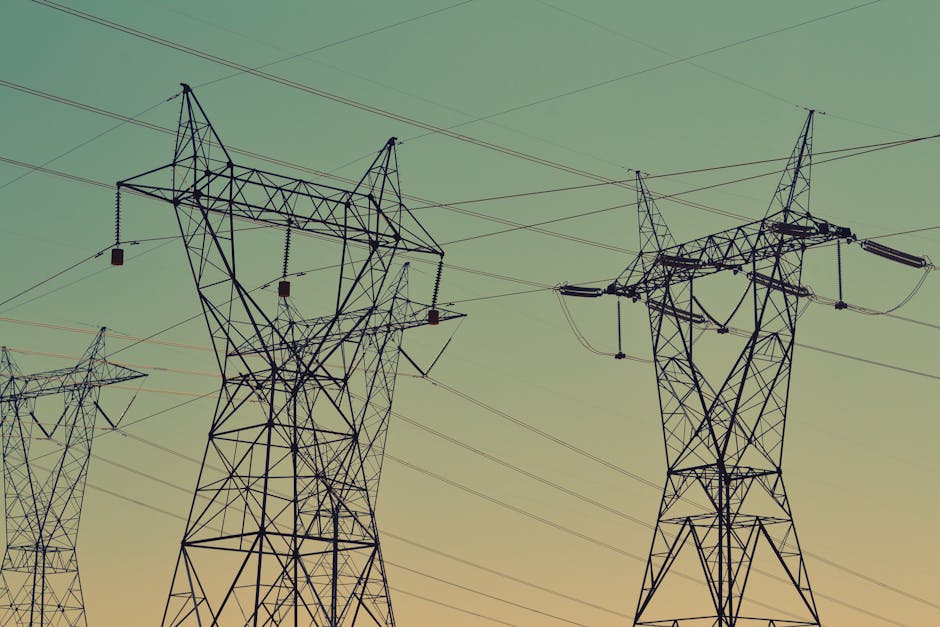
Photo: panumas nikhomkhai
TeraWulf, a company most Americans have never heard of, just secured Google's financial backing for what may be the largest single data center lease in history: $19 billion in contracted commitments from Anthropic, the AI lab behind Claude, at a site in Hawesville, Kentucky. Google is not building anything here. It is providing credit support, essentially co-signing the debt so that TeraWulf can borrow at better rates. And skeptics have good reason to wonder whether a small infrastructure company can actually pull this off.
The structure is worth understanding, because it tells you something about how the AI buildout actually works. Anthropic needs computing power. It doesn't want to own the buildings and power systems that house it. TeraWulf owns land and infrastructure in Hawesville, a small town on the Ohio River best known, until recently, for its aluminum smelter. TeraWulf is converting that industrial footprint into what it calls the Justified Data Campus. Anthropic signs a long-term lease, locking in a revenue stream. TeraWulf then borrows against that stream to finance construction.
The problem is that lenders look hard at who is on the other end of the lease. Anthropic is a privately held AI company with enormous ambitions and enormous losses. That is not a profile that gets you the cheapest debt. Google, by contrast, holds a AA+ credit rating from S&P, one of the highest possible. When Google steps in and backstops the financing, it effectively tells lenders: if something goes sideways, we stand behind this. The cost of borrowing drops. The project becomes viable at a scale it otherwise might not be.
Why this lands in Hawesville
Hawesville is not an obvious location for the infrastructure of artificial intelligence. But the logic is straightforward: power. Data centers running AI workloads consume electricity at a scale that most grids cannot support, and industrial sites in the Ohio Valley often sit near cheap, abundant power. TeraWulf has been operating a Bitcoin mining facility on the same campus, which means it has already built out power infrastructure. AI data centers are, in some ways, a more valuable use of that same resource.
The construction agreement with Fluor adds a layer of credibility. Fluor is one of the largest engineering and construction firms in the world, with over a century of experience on complex industrial projects. For a company like TeraWulf, the partnership is partly about capability and partly about signaling: when you are asking lenders and tenants to commit to a $19 billion project, the name of your contractor matters. Fluor brings procurement networks and a labor pool. As TeraWulf's CEO noted, labor availability is now one of the binding constraints on large-scale data center development across the country.
Under the construction schedule, the first buildings are expected to be ready for service in late 2027, with the remainder completing through mid-2028.
What this means beyond Kentucky
The deal is a small but telling piece of a much larger pattern. The United States is in the early stages of a massive infrastructure buildout for AI, and the geography of that buildout is not settled. It is not concentrated in Silicon Valley or Northern Virginia. It is spreading into industrial towns with cheap power, available land, and existing infrastructure, places like Hawesville that have spent decades losing manufacturing jobs and are now being reconsidered as sites for a different kind of heavy industry.
That does not mean the jobs are equivalent, the economic footprint identical, or the transition painless. Data centers employ far fewer people per square foot than factories. But the tax base, the power contracts, and the construction employment are real and consequential for communities that have had little of either for a long time.
The bigger question is whether the AI demand driving all of this holds. Anthropic is spending at a scale that assumes AI becomes a central part of how businesses operate. If that assumption proves right, Hawesville is early. If it proves wrong, a lot of very expensive concrete will be sitting in western Kentucky.