The Quad is building things now, not just making statements
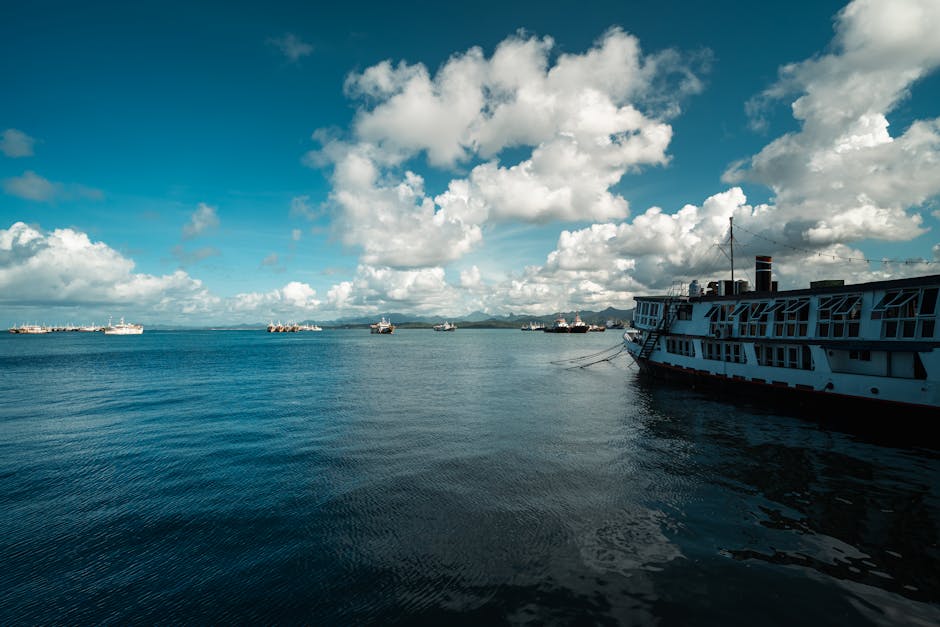
Photo: Donovan Kelly
The race to control the raw materials inside your phone, your car, and the next generation of fighter jets just got a new set of players with a concrete plan.
The foreign ministers of Australia, India, Japan, and the United States met in New Delhi on Monday and emerged with more than a communique. They announced the Quad's first joint infrastructure project, a port in Fiji, and signed agreements on energy security and a framework for critical minerals supply chains. For a group that critics have accused of being long on ambition and short on output, these are the kinds of tangible steps that matter.
Why minerals, and why now
Critical minerals are the unglamorous backbone of modern industry: the stuff mined and processed into the components that make semiconductors work, defense systems function, and electric vehicles run. Right now, China dominates much of that supply chain, particularly in processing. That dominance has already been used as leverage. After a diplomatic dispute, China halted shipments of certain minerals to Japan that are used in aerospace, defense, and semiconductor manufacturing. Japan felt the squeeze directly.
The new minerals framework is designed to prevent that kind of pressure from working. It would coordinate investment across the four countries, covering mining, processing, and even recycling of critical minerals. The idea is to build enough parallel capacity that no single country can flip a switch and cut off supply to an ally.
For American manufacturers and defense contractors, this matters. The U.S. has struggled to build domestic processing capacity for rare minerals fast enough. A coordinated Quad framework could mean allied processing facilities in Australia or India effectively serve as a backstop for American industry, and vice versa.
A port in the Pacific
The Fiji port announcement is about something different but related: presence.
The Pacific Islands have become a quiet contest between China, which has been building infrastructure and signing security agreements across the region, and the U.S. and its allies, who have been slower to show up with concrete projects. Secretary of State Marco Rubio framed the port explicitly as a response to "insufficient port capacity in the Pacific Islands."
A functioning port is durable influence. It shapes trade routes, military logistics, and local economic dependence. China has understood this for years. The Quad is now using the same playbook.
The summit question
The Quad has had a momentum problem. The group failed to hold a leaders-level summit last year, a gap that analysts noted publicly. Premesha Saha of the Asia Society Australia told Reuters that "the absence of a leaders' summit has raised some doubts, but that does not necessarily indicate declining importance," adding that consistent ministerial-level delivery can keep the group relevant without constant headline summits.
Rubio said diplomats would work toward a leaders' meeting later this year, which would likely require a Trump visit to India. India has pressed for that visit. Whether it happens will signal how seriously Washington treats the partnership at the highest level.
China, for its part, called the Quad "exclusive" and said cooperation in the region "should not target any third party." That framing is Beijing's standard response, but the minerals framework and the Fiji port are precisely the kind of moves that reduce China's ability to use economic pressure as foreign policy.
The bigger story here is structural. For decades, the global supply chain for critical materials ran through Chinese processing facilities largely because it was cheap and convenient. That convenience is now visibly expensive in geopolitical terms. What the Quad announced in New Delhi is an attempt to build an alternative architecture before the next supply disruption, not after it.
That shift, if it holds, will eventually touch prices, jobs, and supply security in every country that makes things.