Canada's oil sands are on fire again, and it happens every year now
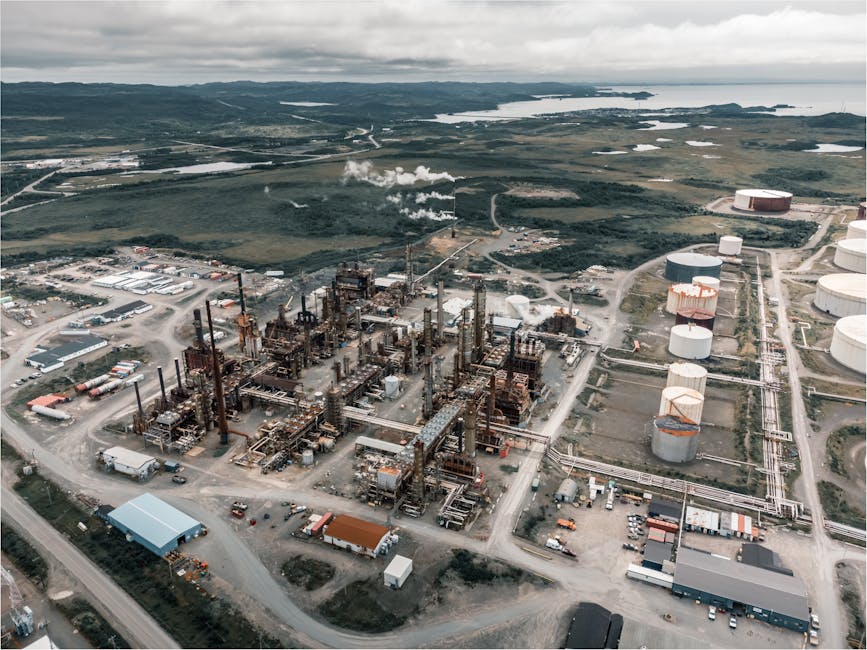
Photo: Erik Mclean
Seven wildfires were burning near Canada's biggest oil sands facilities on Sunday, and the conditions that could ignite more remain extreme. No production has been lost yet. But the operative word is "yet."
The fires are burning within 12 miles of major operations run by Cenovus Energy and Canadian Natural Resources in northern Alberta. A heavy rain forecast over the weekend gave firefighters some relief, and an evacuation alert for the small community of Conklin was lifted Sunday. For now, no communities are directly under threat.
That's the good news. The pattern behind it is less reassuring.
This is no longer a rare event
Canada is the world's fourth-largest oil producer, and nearly all of that production sits in northern Alberta's boreal forest. Wildfires have always been part of that environment. They are now a near-annual disruption.
Last year, fires forced producers to temporarily shut down roughly 344,000 barrels per day, about 7% of the country's total crude output. In May 2023, more than 100 wildfires across Alberta knocked out at least 319,000 barrels per day, close to 4% of national production. And in 2016, a single catastrophic fire destroyed part of Fort McMurray, forced the evacuation of thousands of oil sands workers, and cut production by a full million barrels per day at its peak.
Three major disruptions in a decade is not a streak of bad luck. It is a structural feature of where Canadian oil is produced and what the climate is doing to that landscape.
What this means beyond Canada
Canada supplies roughly 60% of all U.S. crude oil imports, according to long-running trade data. The oil sands in Alberta are not a marginal supply source for Americans; they are the single largest foreign input into the U.S. refining system, particularly for refineries in the Midwest built specifically to process the heavy crude that the oil sands produce.
A disruption on the scale of 2016 would ripple quickly into U.S. gasoline prices. Even a mid-sized shutdown like 2024's 344,000-barrel-per-day cut adds pressure during a season when American drivers are already paying summer-blend premiums at the pump.
No such disruption has happened yet this year. But fire officials describe the risk of new fires starting in the Fort McMurray area as "extreme," and the season is only beginning.
For the companies operating there, the annual uncertainty is now baked into how they talk to investors. Production forecasts carry an unspoken asterisk from roughly May through August: subject to weather, and weather has been getting worse.
The deeper problem is one of geography and physics. The oil sands cannot be moved. The boreal forest surrounding them is becoming drier and more combustible as average temperatures rise. Firefighting capacity is finite. Rain helps, but it can't be scheduled.
What companies and governments can do is get faster at shutting down safely and restarting quickly, which they have improved at over the past decade. The 2016 disaster took weeks to recover from. More recent shutdowns have been measured in days. That operational learning matters, but it is a coping strategy, not a solution.
The fires will return next spring. The only open question is how bad.