Chrysler's parent is betting on China to save its American brands
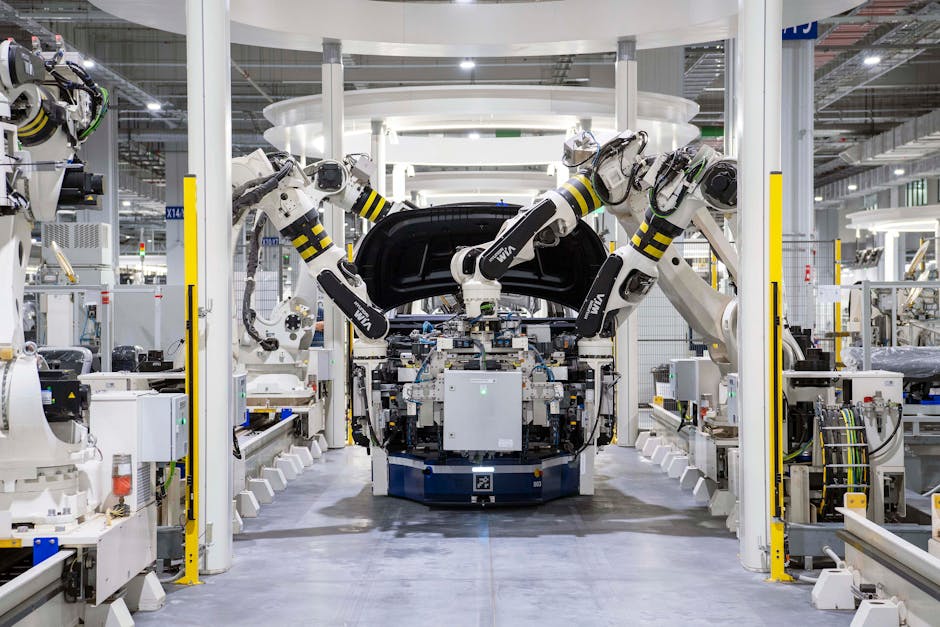
Photo: Hyundai Motor Group
The company that owns Jeep, Ram, Dodge, Chrysler, Fiat, and nine other car brands is in trouble, and its fix involves doubling down on Chinese automakers to help pay for an American comeback.
Stellantis CEO Antonio Filosa is presenting a new long-term strategy to investors Thursday at the company's headquarters in Auburn Hills, Michigan. The pitch comes after a rough stretch: the company lost ground in both the U.S. and Europe, took $26 billion in charges for scaling back its electric vehicle plans, and watched its stock hit an all-time low in March.
The core argument Filosa is making is that Stellantis tried to be everything to everyone and ended up being not quite enough to anyone.
Fewer brands, more focus
The company currently has 14 brands, the largest portfolio in the auto industry. Going forward, four of them will get the bulk of the investment: Jeep, Ram, Peugeot, and Fiat. The others will survive, but with narrower, more regional roles. No brand is being killed outright. As Filosa put it last week, cutting a brand entirely means "losing that customer base for somebody else."
On the U.S. side specifically, Citi analysts noted that Stellantis vehicles currently appeal to only about half of American buyers. The plan to close that gap includes a new Jeep Cherokee, along with compact and midsize pickup trucks designed to compete in segments where Ram currently has no answer.
Fixing the American business is not optional. "They just need their North American business to function," said Massimo Baggiani, a portfolio manager at Niche Asset Management, a London-based firm that has bought into Stellantis twice since March. "That will give immediate value to their stock."
Where China fits in
The more unusual part of the turnaround story is how much it depends on Chinese partnerships. A source familiar with the investor presentation told Reuters it will have "a lot of China in it."
This month, Stellantis expanded its European joint venture with Leapmotor, a Chinese electric vehicle maker, and announced a new deal with Dongfeng to produce vehicles in China. Filosa has also signaled that the company is open to letting other Chinese manufacturers use Stellantis factory space in Europe, where the company carries significant excess production capacity.
The logic runs in two directions. First, sharing factories with Chinese partners helps cover fixed costs at plants that would otherwise run below capacity. Second, and more strategically, it gives Stellantis closer access to Chinese electric vehicle technology, where companies like Leapmotor have developed competitive platforms at lower cost and faster development timelines than most Western rivals.
European automakers broadly are wrestling with this same tension: Chinese competitors that once seemed like a distant threat are now eating into profitable markets across South America and Africa, and are pushing aggressively into Europe itself. For Stellantis, which still earns meaningful money in those emerging regions, the competitive clock is ticking.
What investors are watching
Baggiani was measured in his support. "The good thing is that Filosa seems to be aware and has ideas on how to address such challenges," he said. "We'll need to test him over a longer period."
That is roughly the mood around the whole presentation: cautious willingness to believe, conditional on results. The strategic logic of concentrating capital on four strong brands rather than spreading it thinly across 14 is sound. The bet on Chinese partnerships to fill capacity and accelerate EV development is credible, if politically sensitive given the current trade environment.
The harder question is timing. Stellantis needs its U.S. business to stabilize quickly. New model launches take years to show up in sales numbers. Chinese joint ventures take time to yield manufacturing efficiencies. The turnaround Filosa is describing is structurally coherent, but the company is asking investors to be patient at a moment when the stock has almost no room left to disappoint.