Citadel's Griffin bought a collapsing AI fund's $16B book overnight

Photo: Alex Luna
Ken Griffin pulled an all-nighter this week to buy a piece of a collapsing hedge fund, and it probably made him money. That is, roughly, the business model.
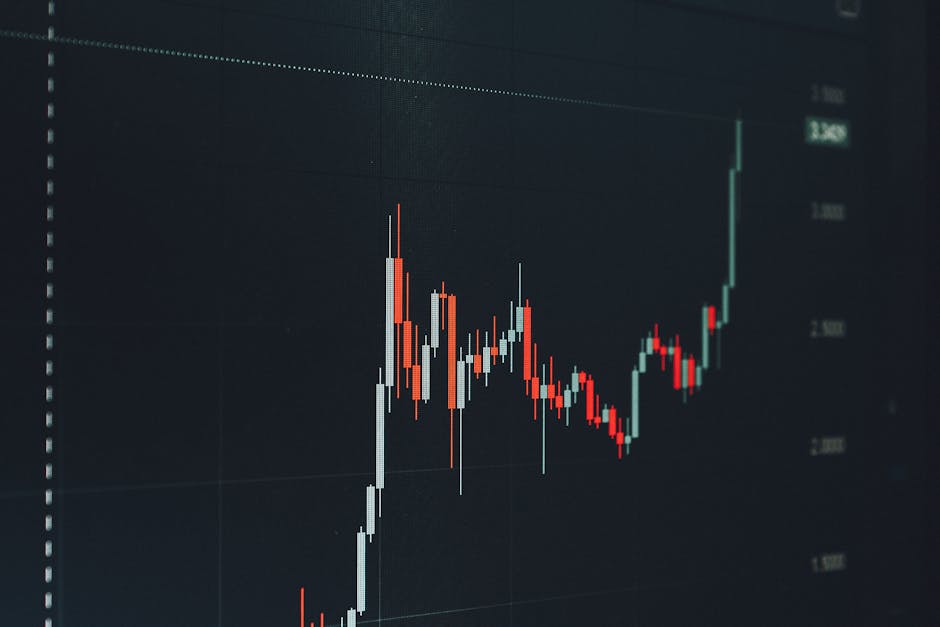
Citadel, the $71 billion hedge fund Griffin founded and runs, stepped in to rescue Situational Awareness, a California fund that had bet heavily on artificial intelligence stocks and lost badly. After a selloff in AI stocks, the Situational Awareness portfolio lost 67% of its value in July alone. The fund was forced to unwind most of its $16 billion public equities book. By Thursday, Citadel had bought a significant chunk of those positions.
The rescue playbook
Griffin, 57, did not stumble into this. He has been running this exact play for more than two decades.
When Enron filed for the largest bankruptcy in U.S. history in 2001, Griffin chartered a jet the same day and sent his executives to interview nearly every trader and analyst who had worked there. Those recruits went on to build Citadel's commodities business. In 2007, hedge fund Sowood Capital handed a portion of its portfolio to Citadel after Sowood became one of the first high-profile casualties of the subprime mortgage crisis. "Citadel offered the only immediate and comprehensive solution," Sowood's founder wrote to clients at the time. Citadel had also absorbed the energy portfolio of Amaranth Advisors after that fund lost $6.4 billion on bad natural gas bets and went out of business. And in 2021, Citadel injected $2.75 billion into Melvin Capital after a Reddit-organized short squeeze nearly destroyed it.
The pattern is consistent: find a fund in distress, move before anyone else can, buy the book at a discount, and profit when markets stabilize.
This time, word spread on Wall Street that at least one firm was in serious trouble. Griffin assembled his top lieutenants, including co-Chief Investment Officer Pablo Salame, Chief Operating Officer Gerald Beeson, and head of equity quantitative research Perry Vais, to investigate. By Wednesday morning, Citadel had made contact with Situational Awareness. Griffin spoke directly with the fund's founder, Leopold Aschenbrenner, a former OpenAI researcher who started the fund. The team worked through the night analyzing what positions Situational Awareness held and how easily they could be traded.
"We let you down," Aschenbrenner wrote to his investors in a letter seen by Reuters.
Why only Citadel
One investor familiar with the deal told Reuters: "There are only a few firms that could take down this much risk."
That sentence is worth sitting with. A $16 billion portfolio had to be unwound in a matter of days during a volatile market. Most institutions, faced with that volume and that speed, would have walked away or demanded terms so punishing they would have amounted to the same thing. Citadel could absorb it because it has the capital, the analytical infrastructure, and, critically, the institutional memory of having done it before.
Griffin described the underlying logic in a 2023 letter to investors: "During market stress, the collective judgment of our business leaders, risk managers and portfolio managers enables us to capitalize on market opportunities when others, who depend on simplistic stop-loss approaches, cannot."
Reuters reported that many of the AI stocks in the acquired portfolio have risen since Citadel bought them, though the exact profit is not yet known.
The broader implication is structural. When a fund collapse threatens to ripple outward, there is no federal backstop for hedge funds the way there is for banks. The stability, such as it is, comes from private actors like Citadel deciding that a distressed portfolio is cheap enough to be worth buying. That is not a safety net. It is a profit motive that happens to function like one, when the numbers line up.
For Aschenbrenner's investors, the outcome is still a 67% loss in a single month. Citadel's intervention stopped the bleeding. It did not undo it.