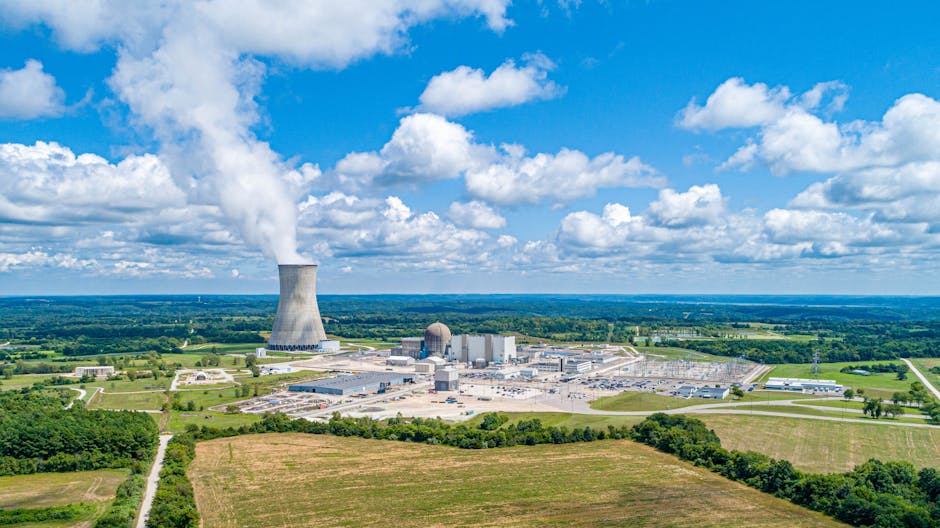
Craig Station was supposed to be dead. The feds just revived it again.

Photo: marius vasile
A coal-fired power unit in Colorado was scheduled to shut down at the end of 2025. Six months later, the federal government is keeping it alive for the third time.
Energy Secretary Chris Wright issued an emergency order Friday directing several utilities, including Xcel Energy's Colorado subsidiary and PacifiCorp, to keep Craig Station Unit 1 ready to run through September 26. The Southwest Power Pool, which coordinates electricity across a wide swath of the central and western US, would direct when the unit actually generates power. Wright first issued an emergency extension in December 2025, then again in March 2026, and now again ahead of summer peak demand.
Why a retired coal plant is back in the conversation
The Department of Energy cited two specific problems in the Rocky Mountain region: aging thermal generation and supply-chain constraints. In plain terms, the region doesn't have enough newer power plants coming online quickly enough to replace the old ones, and getting the equipment to build them takes longer than the grid can wait.
That's not a Colorado-only problem. It's a pattern playing out across the country. Power demand is growing faster than new generation is being built, driven by data centers, electric vehicles, and the general electrification of things that used to run on gas or diesel. At the same time, older fossil-fuel plants are hitting their planned retirement dates. The gap between "old plants going offline" and "new capacity coming online" is exactly the kind of window that creates reliability risk in a hot summer.
Wright's argument is straightforward: retiring reliable generation now threatens grid reliability and raises costs when demand peaks. During a summer heat wave, that's not a theoretical concern. It's the difference between rolling blackouts and stable air conditioning for millions of households across Colorado and neighboring states.
What this means for the people paying the bills
Craig Station Unit 1 running for another three months probably won't show up as a line item on anyone's electricity bill. But the broader dynamic will. Emergency orders like this one are a symptom of a grid that is being stretched between two timelines that don't line up: the political and economic push to retire fossil fuel plants, and the slower physical reality of replacing their capacity with something else.
Every time a utility keeps an old plant running past its planned retirement, that utility still incurs operating costs, maintenance costs, and the cost of fuel. Those costs eventually flow through to ratepayers. The Trump administration has leaned on emergency powers repeatedly to extend the lives of aging coal and gas plants, citing reliability. The result is that consumers in affected regions may end up paying to keep old infrastructure running while also, through utility rates and federal energy policy, paying to build the new infrastructure meant to replace it.
The Craig Station order runs through late September, covering the peak of summer demand. Whether the unit gets extended again in the fall will depend on whether the Rocky Mountain region's supply picture has improved, or whether the same supply-chain constraints and generation gaps are still present. Given that those are structural problems and not seasonal ones, a fourth extension would not be surprising.
What's worth watching is whether emergency orders become routine. When the exception becomes the pattern, the underlying system isn't managing an unusual stress. It's telling you something about how poorly calibrated the retirement timeline was in the first place.