FedEx Freight just went solo and Wall Street immediately marked it down
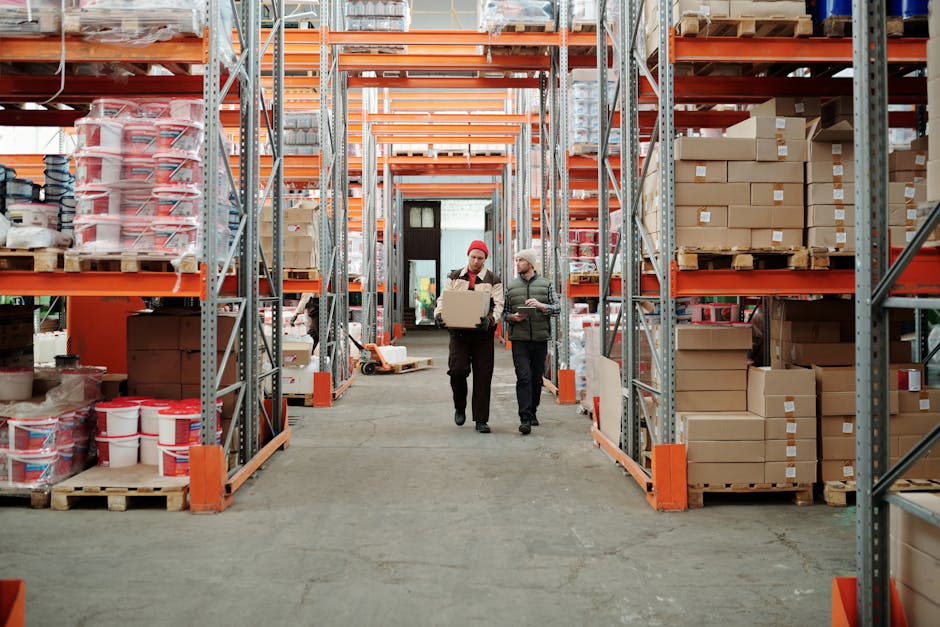
Photo: Tiger Lily
FedEx Freight made its debut as a standalone company on Monday, and the market's first verdict was skeptical. Shares opened at $164, rose briefly, then slid as much as 13.8% before recovering to close down about 2.8%. For a company that will now have to prove itself without the shelter of a corporate parent, that's not an encouraging start.
The spinoff itself completed on schedule. FedEx Freight, which hauls large shipments across the country as a so-called "less-than-truckload" carrier (meaning it combines freight from multiple customers into shared truck space), is now trading independently on the New York Stock Exchange. Parent FedEx Corp's shares barely moved, which probably tells you where investors think the heavier lift is.
Why Wall Street isn't convinced yet
J.P. Morgan analyst Brian Ossenbeck put the skepticism plainly: he values FedEx Freight at a lower earnings multiple than rivals XPO, Saia, and Old Dominion Freight Line, "given execution risk and transition costs related to the spin as well as persistent underperformance on service and volume metrics." That phrase, "persistent underperformance," is the kind of language that follows a company around. It means the business hasn't been keeping up with competitors on the basics: filling trucks, delivering on time, and growing market share.
Separation from FedEx will cost money in the short term. The company has to build its own back-office systems, its own IT infrastructure, its own corporate functions. That work takes time and capital, and it tends to weigh on profits right when a newly independent company most needs to look strong.
The company's own projections are more optimistic. CFO Marshall Witt laid out a medium-term target of 4% to 6% annual revenue growth and 10% to 12% annual growth in core profit. The gap between that outlook and the market's skepticism is where the real story lives: FedEx Freight is betting that cost controls, automation, and a shift toward higher-margin cargo will eventually close the gap with its rivals. Wall Street wants to see it before it believes it.
Timing isn't entirely against them
There's one piece of genuine good news in the backdrop. Freight rates may be coming out of a four-year slump. Several smaller trucking operators have exited the market after years of financial losses, which reduces competition and gives the survivors more pricing power. A separate factor is also tightening the driver supply: federal regulators are pushing to restrict commercial driver licenses to U.S. citizens only, which would shrink the pool of available drivers and, in a tight labor market, tends to push wages and freight rates higher at the same time.
For shippers (the businesses that put cargo on FedEx Freight's trucks), a tighter trucking market almost certainly means higher rates over the next few years. That cost gets passed through the supply chain, and it eventually lands in the price of goods. It's a slow, diffuse effect, not a single bill arriving in your mailbox, but trucking costs are embedded in nearly everything that moves by road.
For FedEx Freight itself, that same tightening market could be a tailwind, if the company can execute. The question the market is asking on day one is whether a company with a track record of underperformance can pull off a complex corporate separation, modernize its operations, and still capture the upside of an improving freight cycle, all at once.
That's a lot to get right. The opening-day selloff suggests investors want to see the proof before they pay for the potential.