Ryanair owns its planes outright. Your cheap ticket just got cheaper to protect.
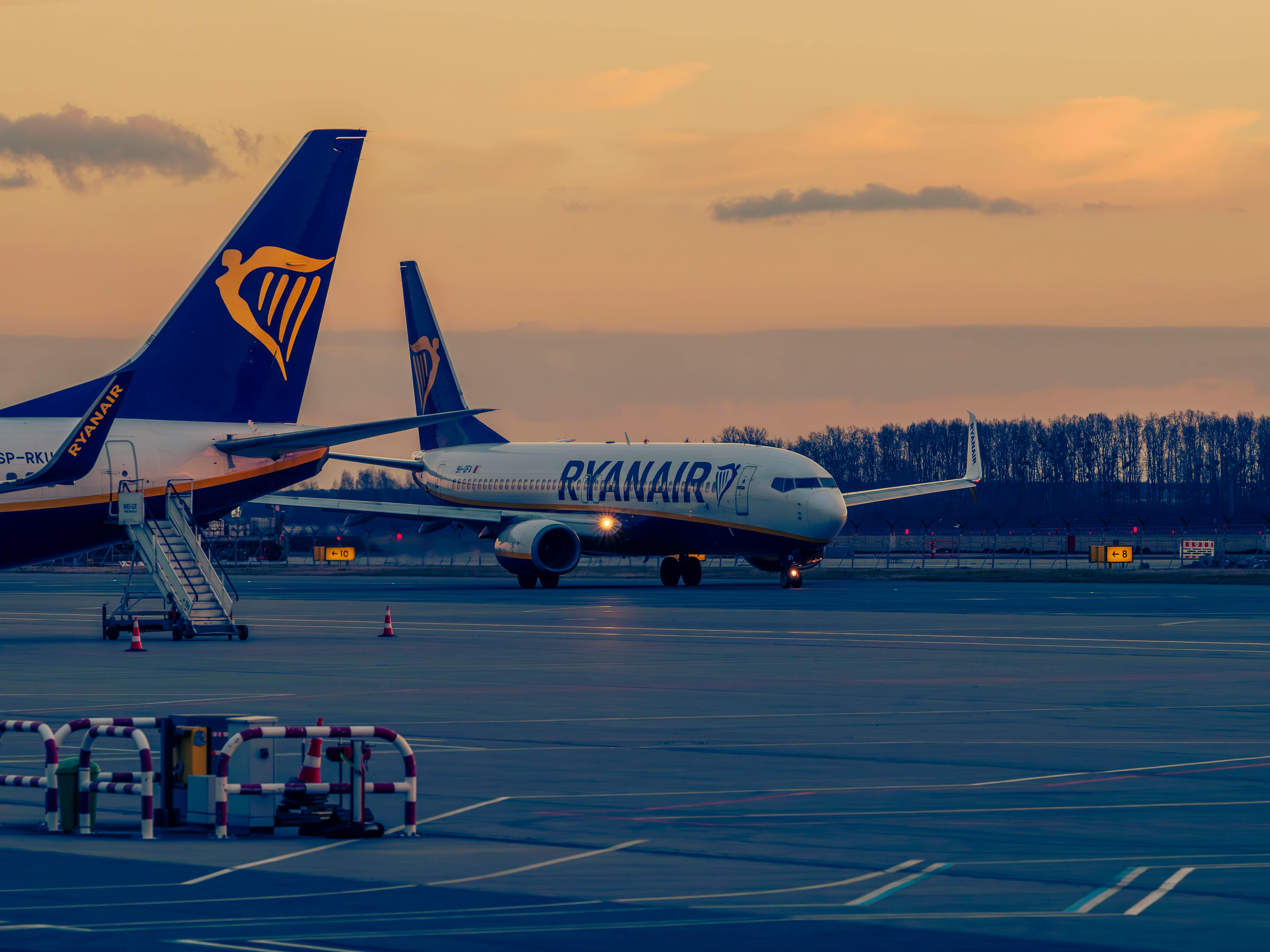
Photo: fotoinformator pl
The cheapest flights in Europe just got a little more durable. Ryanair announced Monday that it has repaid a 1.2 billion euro (about $1.4 billion) bond, leaving the airline effectively debt-free for the first time since it listed on the stock exchange in 1997.
That means Ryanair now owns its entire fleet of 620 Boeing 737 aircraft outright, with no lender holding a claim against them.
Why this matters beyond a balance sheet
Most airlines do not own their planes. They lease them, the way a business might lease office space, or they borrow heavily to buy them outright. Either way, they owe money every month regardless of how many seats they fill. When a downturn hits, as it did catastrophically in 2020, those fixed obligations become a trap. Several European carriers collapsed or needed government rescues in part because debt kept piling up while revenue disappeared.
Ryanair survived that period partly because of a stronger balance sheet than most. Now it has gone further. Owning a fleet of 620 aircraft free and clear gives it a reserve it can borrow against in an emergency, or simply an absence of monthly payments that competitors have to make no matter what.
The company's chief financial officer, Neil Sorahan, said the debt-free position "is set to further widen the cost gap with rivals dependent on long-term debt and leasing to finance their aircraft." That is not a small claim. Ryanair's entire business model is built on having lower costs than everyone else so it can price tickets lower than everyone else and still make money. If its cost advantage over rivals grows, it can cut fares more aggressively, hold prices lower during slow seasons, or simply survive a future crisis that forces a higher-cost competitor to reduce routes or shut down.
For passengers who rely on Ryanair for affordable travel across Europe, a financially stronger airline is a more reliable one. Budget carriers have a history of sudden collapses. Monarch, Flybe, and Norwegian's long-haul operation are recent examples. The airline that owns its fleet rather than renting it is structurally harder to kill.
What comes next
The debt-free status is not meant to be permanent. Sorahan flagged that Ryanair expects to return to the bond markets at some point, likely as it scales up to take delivery of up to 50 Boeing MAX-10 aircraft per year from 2029 onward. Those deliveries would represent a significant expansion of the fleet, and financing that growth will eventually require borrowing again.
But there is a difference between borrowing to grow from a position of zero debt and borrowing while already carrying obligations. Ryanair will be able to choose when, and on what terms, it re-enters the debt markets rather than being forced to refinance by a looming maturity. That kind of leverage over lenders typically means lower interest costs, which feed back into the cost structure that sets ticket prices.
The broader pattern here is one of an airline that has used the post-pandemic recovery period not just to rebuild revenue but to restructure its finances in a way that increases its long-term dominance. Europe's short-haul market is already heavily consolidated around a small number of large carriers. A Ryanair with no debt and a growing fleet is likely to push that consolidation further.