ITA Airways may sue Pratt & Whitney over engines grounding its planes
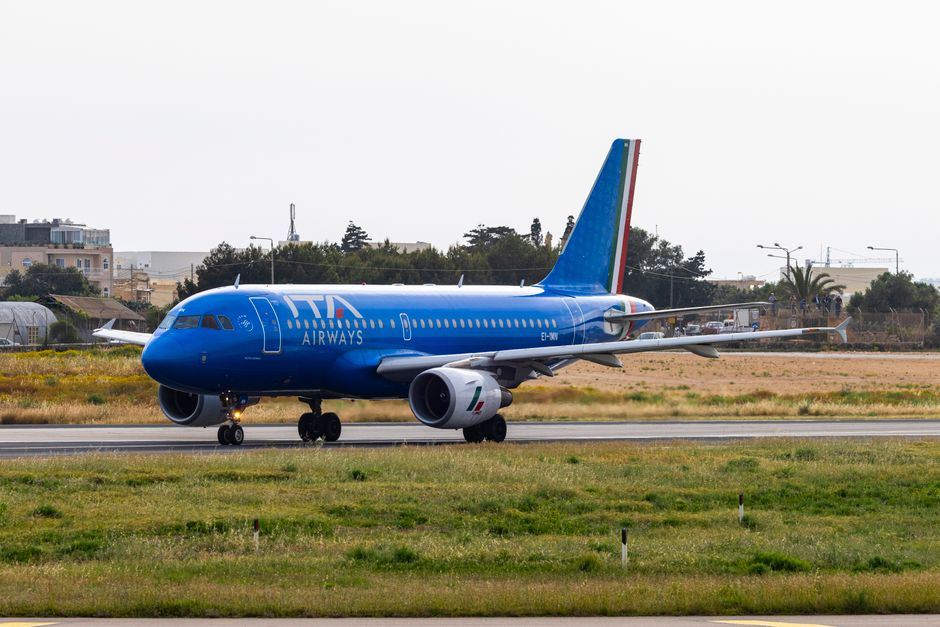
Photo: Drinu Cutajar
ITA Airways is running its 80-plane fleet with roughly 16 aircraft sitting idle on the ground, and the company's CEO says he has six to eight weeks to decide whether to sue the engine maker responsible.
The problem is a manufacturing defect in Pratt & Whitney's GTF engines, the power plants fitted to the A320neo, Airbus's newest and most fuel-efficient short-haul jet. The defect has triggered a global inspection and repair backlog so severe that hundreds of A320neo planes worldwide have been pulled from service at once. For ITA, that means nearly one in five of its aircraft is grounded at any given time.
"It's imminent," ITA CEO Joerg Eberhart told Reuters on the sidelines of a major airline industry gathering in Rio de Janeiro. "We will have to decide within the next six to eight weeks." RTX, the parent company of Pratt & Whitney, did not respond to a request for comment.
Why this matters beyond boardrooms
When an airline loses 20% of its capacity without warning, it cannot simply conjure replacement planes. The global aircraft market is already stretched thin, with both Boeing and Airbus running years-long delivery backlogs. Leased spares are scarce and expensive. The cost falls somewhere specific: on ticket prices, on schedule reliability, and on the routes a carrier chooses to protect versus cut.
ITA is Italy's national carrier, relaunched in 2021 after the collapse of Alitalia. It is still building its network and passenger base. Losing a fifth of its fleet during the summer travel peak, arguably the most important revenue window of the year, is not an operational inconvenience. It is a structural threat to a carrier that cannot yet absorb that kind of hit the way a larger airline might.
The Pratt & Whitney GTF engine problem has been unfolding for roughly two years across the global aviation industry. The core issue is a manufacturing contamination in a specific metal powder used to make turbine components. Parts that should last years are wearing faster than expected, requiring early removal and inspection. The repair network was not built to handle this volume simultaneously, so planes wait. Some have waited months.
Who takes the loss
Airlines that signed long-term contracts for these engines did so expecting reliability guarantees. When planes sit idle, the airline still pays lease costs, still pays crews, and still loses the revenue the flight would have generated. A lawsuit, if ITA pursues one, would attempt to recover some of those losses from RTX directly.
Whether ITA wins that argument in court depends on the specific contract language, which is not public. But even the threat of litigation signals something worth noting: the engine supplier relationship, usually managed quietly behind the scenes, has broken down badly enough that a CEO is announcing the possibility of legal action at a global industry conference.
For travelers, the most direct consequence is capacity. Fewer planes flying means less flexibility on fares and schedules, particularly on routes where ITA is the primary or only carrier. Italy's domestic market and some thinner European routes are most exposed.
The broader pattern here is a supply chain story that keeps repeating across aviation. Manufacturers designed the post-pandemic recovery around demand bouncing back faster than production could scale. It did. Now airlines are caught between surging passenger numbers and equipment that either hasn't arrived or can't fly. The Pratt & Whitney defect is a particularly sharp version of that pressure, because it landed on the specific engine type that was supposed to be the affordable, efficient workhorse of European short-haul travel.
ITA's decision in the next two months will not fix the grounded planes. But it may set a precedent for how airlines and engine makers renegotiate the cost of this crisis.