Microsoft bet $3.9bn on southeast Asia's AI boom. Now the grid is buckling.

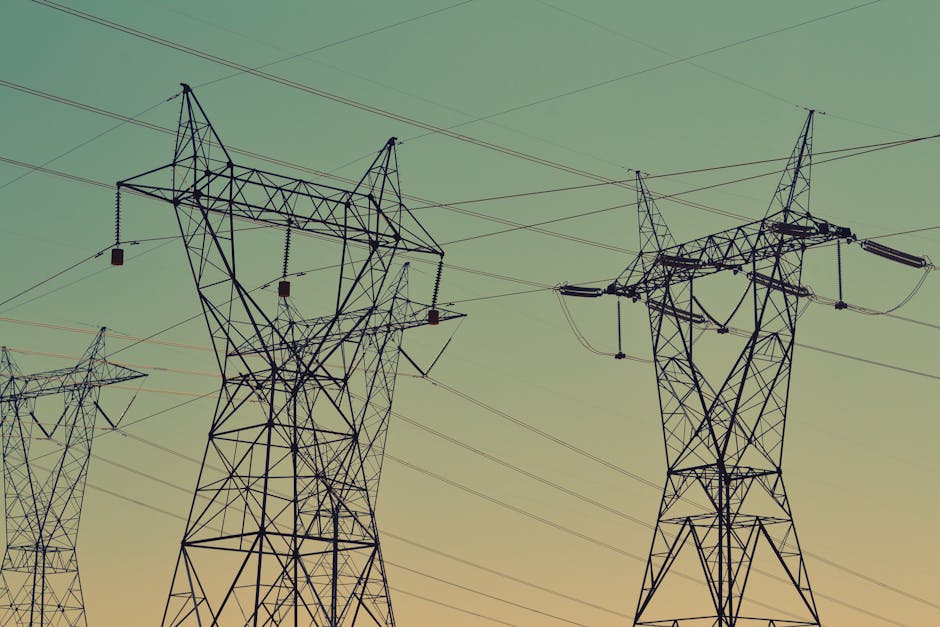
Photo: panumas nikhomkhai
Microsoft has committed $3.9 billion to datacenters in Malaysia and Indonesia alone, part of a regional gold rush that turned southeast Asia into the fastest-growing hub for AI infrastructure on the planet. Thailand had $27 billion in approved projects on the books just months ago. Johor, a Malaysian state most people outside the region couldn't place on a map, became the largest datacenter hub in southeast Asia seemingly overnight.
Then, in September 2026, Thailand froze it all. Construction paused on 49 projects. Approval decisions stopped on 117 more. The government cited a lack of sufficient details for regulation and environmental monitoring. Indonesia's West Java province separately halted a datacenter project over missing permits and an incomplete environmental review. The arms race hit a wall.
How a city-state's land problem became a regional boom
The backstory matters. Through the 2010s, Singapore was southeast Asia's datacenter capital. Then it banned new facilities from 2019 to 2022, calling them "intensive users of water and electricity." When the ban partially lifted, approval stayed selective. Between 2023 and 2026, Singapore added just 95 megawatts of operational capacity.
That left a giant gap, and the rest of the region rushed to fill it. Johor, just across the causeway from Singapore, grew its datacenter capacity more than tenfold, from 94 megawatts in 2023 to 1,110 megawatts by 2026, with another 3,088 megawatts under construction or planned. The state has attracted $40 billion in datacenter investment in total. AirTrunk, an Australian operator, plans to spend $3 billion to double its Johor facilities. Bangkok's development pipeline stands at 2,084 megawatts. Greater Jakarta's pipeline is 1,699 megawatts. TikTok and others were lining up in Thailand before the freeze.
According to real estate firm Cushman and Wakefield, southeast Asia now holds about 50 percent of all datacenter capacity under construction across the entire Asia-Pacific region. China has more operational capacity, but southeast Asia is where the growth is happening.
The grid problem no one has solved
Here is the stress fracture underneath all of it. Datacenters running AI workloads don't just need land and fiber. They need enormous, continuous amounts of electricity, and southeast Asia's power grids were not built for this.
Johor's datacenters already consume 24 percent of the state's total power, according to energy consultancy Wood Mackenzie. By 2035, that share could reach 40 percent. Alvin Tan, a research analyst at Wood Mackenzie, warned that the rapid buildup "has the potential to create localized grid connection bottlenecks and increase the need for transmission network upgrades as well as new power supply capacity."
Thailand's energy minister, Akanat Promphan, has acknowledged that datacenters require large amounts of power. The freeze suggests the government concluded it couldn't responsibly keep approving projects before it understood what they would actually demand from the system.
This is the pattern that played out in Singapore a decade ago, and in parts of Europe and the United States before that: a region becomes attractive for datacenters, investment floods in faster than infrastructure can absorb it, and governments eventually apply the brakes. The difference in southeast Asia is the scale and speed. AI drove demand that is orders of magnitude larger than the cloud computing buildout of the 2010s, and it arrived in countries whose grid infrastructure, regulatory frameworks, and environmental review processes were not ready for it.
The investments aren't going away. Microsoft, AirTrunk, Princeton Digital Group, and others have too much capital committed to walk back now. But the next phase of the AI infrastructure buildout in this region will be slower, more conditional, and shaped as much by transmission lines and permits as by compute demand. The bottleneck has shifted from capital to kilowatts.