Nike spent two years on a turnaround. The World Cup is the test.
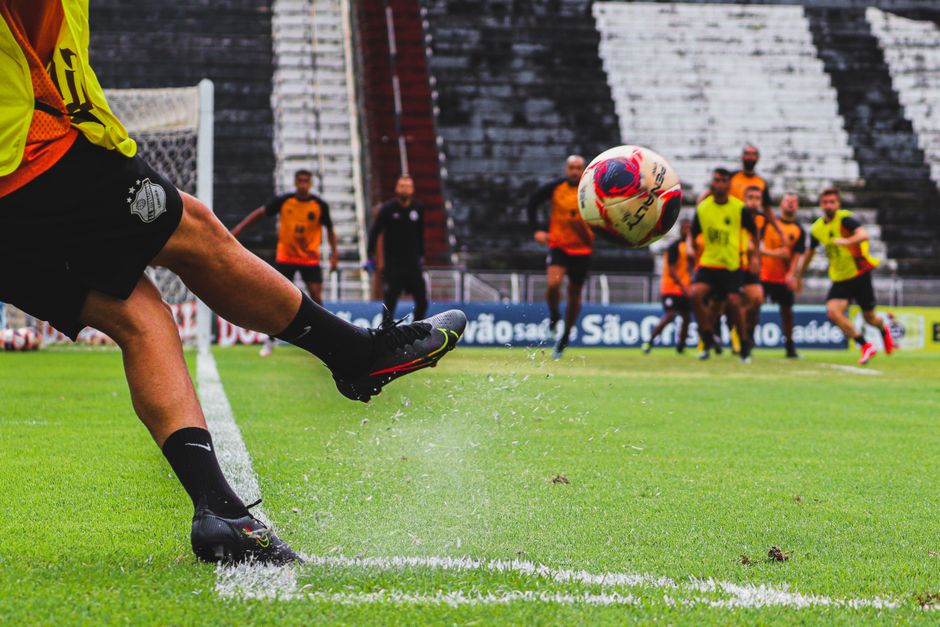
Photo: Thiago Kai
Nike has a lot riding on a tournament it does not officially sponsor.
While Adidas holds the official World Cup partnership, supplies the match ball, and dresses 14 national teams, Nike has built its own counter-offensive: 12 national team kits, two new Mercurial cleat launches, a splashy ad campaign featuring Kylian Mbappé and Kim Kardashian, and a retail push across more than 5,000 stores globally. The "Rip the Script" campaign is plastered on windows in midtown Manhattan. Brazil, France, and the United States jerseys line the front of Times Square soccer shops. The brand presence is real.
The business problem is just as real.
CEO Elliott Hill took over two years ago to repair a company that had badly misjudged its strategy. His predecessor had cut off wholesale retail partners, like Foot Locker and Dick's Sporting Goods, in favor of selling directly to consumers. It saved on middlemen but lost shelf space and cultural visibility. Nike is now rebuilding those retailer relationships from scratch. Nike's vice president of global football, Camilo Andrade, told Reuters the strategy has been "first and foremost to make sure that we restore those relationships."
Progress is visible. Foot Locker's Champs Sports store in Manhattan is giving Nike prominent placement. But the ground lost to Adidas is also visible. Analysts at Telsey Advisory Group wrote this week that Adidas products appear more visible at stores like Dick's Sporting Goods and Foot Locker. JD Sports, the British sporting goods retailer, said its best-selling team jerseys so far are Mexico and Argentina, both Adidas kits.
At the Pelé Soccer store in Times Square, 30-year-old Louis Carrillo browsed Mexico jerseys before the team's opening match against South Africa. He said he was drawn to them partly because of the Adidas three stripes. He used to buy Nike's Mercurial boots when he was younger, "but I feel that it's not the same anymore."
That sentiment, repeated across enough shoppers, is the core of Nike's problem. The brand's cultural magnetism, the thing that made a teenager feel they needed that specific shoe, has dulled. A World Cup campaign can remind people the brand exists. It cannot, on its own, replace the feeling.
The arithmetic is unforgiving
Nike expects sales to drop 2% to 4% in the current quarter. Its shares have fallen more than 30% this year. RBC Capital Markets downgraded its Nike stock rating on June 10, one day before the World Cup began, with analyst Piral Dadhania citing a slower-than-expected turnaround and concluding that the World Cup and new products are "not sufficient to offset clean-up actions elsewhere in the business."
Morningstar analyst David Swartz put it plainly: "The problems that Nike has are not going to just go away because of the World Cup. But it's certainly an opportunity to get the brand back in front of people."
That framing captures the stakes precisely. A good World Cup does not fix Nike. A bad one, where Adidas jerseys dominate TV coverage because Argentina or Mexico runs deep into the bracket, could make the next two years harder. Tournament outcomes are outside anyone's control, which is part of why betting on sports moments as brand strategy is genuinely risky. Winning teams sell jerseys. Winning kit suppliers get the halo.
What Nike actually controls is product and distribution. The two new Mercurial cleat lines and the retailer repair effort are the structural plays. The World Cup is amplification. The deeper question for Hill is whether new products can cut through before investors lose patience entirely. Right now, they are watching a company that knows exactly what went wrong and is working methodically to fix it, but has not yet given the market a reason to believe the fix will hold.