South Africa wants new nuclear plants. The World Bank may pay for them.
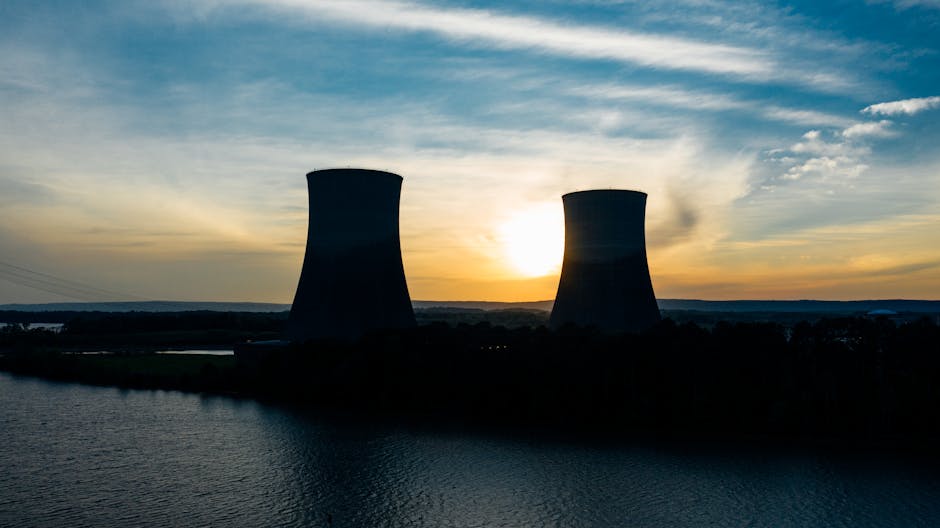
Photo: K
For years, South Africa's power crisis was measured in hours of darkness. Rolling blackouts, locally called "load shedding," cost businesses billions and kept ordinary households cooking by candlelight. The country's long-term bet on fixing that problem may now be nuclear, and it is looking to the World Bank to help pay for it.
Eskom, the state-owned utility that controls virtually all of South Africa's electricity, confirmed on Wednesday that it is in exploratory talks with the World Bank and other funders about financing a new nuclear build program. A senior Eskom official said the program could be formally launched within 12 months. The utility is currently preparing a request for information covering up to 5,200 megawatts of new nuclear generation capacity, according to Reuters.
To put that number in context: 5,200 megawatts is roughly the output of five large nuclear reactors. Eskom already operates Africa's only working nuclear power station, Koeberg, near Cape Town. This would be a major expansion beyond it.
Why nuclear, and why now
South Africa's electricity grid runs overwhelmingly on coal. That has always created two problems: coal plants age and break down, contributing to blackouts, and the fuel itself is a political liability as global pressure to decarbonize intensifies. The government wants what planners call "baseload" capacity, meaning generation that runs continuously regardless of whether the sun is shining or the wind is blowing. Solar and wind can reduce peak demand, but they cannot alone replace the steady, around-the-clock output that coal currently provides. Nuclear can.
The timing also reflects a broader shift in how development lenders think about nuclear. For years, institutions like the World Bank largely avoided financing nuclear projects in developing countries, citing cost overruns and construction complexity. That posture has softened as the scale of the global energy transition has become clearer. If the World Bank does get involved here, it would mark a meaningful signal about where multilateral lending is heading.
The gaps are still large
These are early, exploratory conversations. No financing terms have been announced, no reactor design has been selected, and no construction contracts have been signed. Nuclear projects routinely take a decade or more to complete even when funding and approvals move quickly, which they rarely do.
The costs involved are enormous. New nuclear construction in other countries has frequently run two to three times over initial budget estimates. South Africa would be managing that risk while also navigating a government procurement process with a history of delays and, at Eskom specifically, a recent past marked by severe financial strain and corruption investigations.
Still, the fact that Eskom is framing a 12-month launch timeline and naming the World Bank as a conversation partner suggests the program has moved beyond pure aspiration. A formal request for information from builders and vendors would be the first concrete step, drawing in the major reactor suppliers, including American, French, South Korean, and Chinese companies, all of which are actively competing for nuclear contracts in emerging markets.
For South Africans, the stakes are straightforward. Reliable electricity is not a luxury. It is the foundation of every business, every hospital, every school. Whether nuclear expansion can actually deliver that reliability, on budget and within a generation's worth of time, is the question that will outlast any announcement made this week.