Trump wants to own a piece of America's drone industry
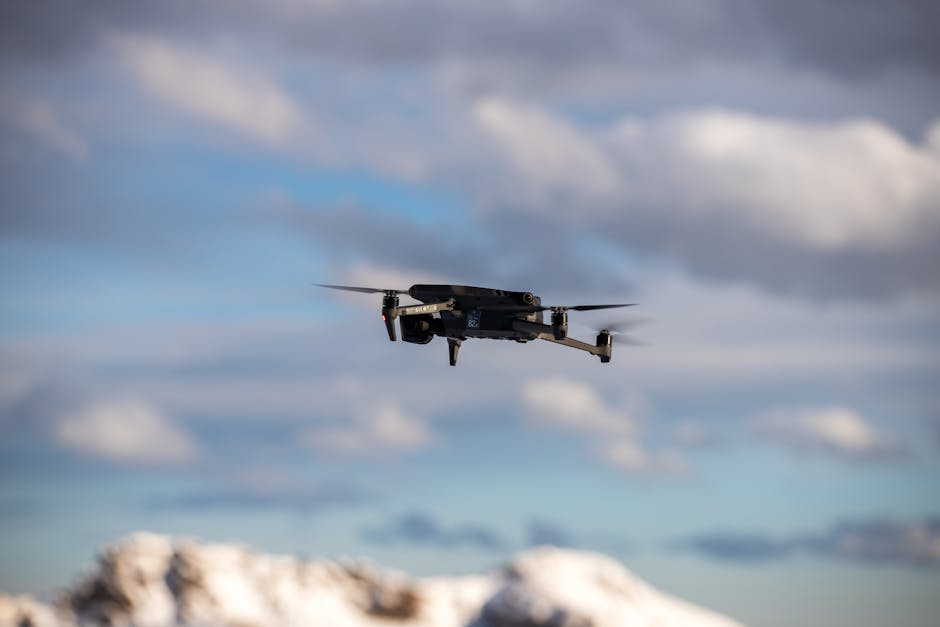
Photo: Alan Kabeš
The Trump administration is in talks to funnel government money into American drone companies, and some of the deals on the table would give Washington an ownership stake in the firms it backs. That is not how the U.S. government typically works. It is, however, how you build an industrial policy.
The Wall Street Journal reported Wednesday that discussions between private drone companies and the Pentagon have been underway for months. The firms involved include Unusual Machines, a drone components maker that counts Donald Trump Jr. as an adviser, and Neros, an autonomous drone startup backed by Sequoia Capital. Performance Drone Works, which already holds an Army contract for reconnaissance drones, is also under consideration. Reuters was unable to immediately verify the report, and the White House, Pentagon, and companies did not respond to requests for comment.
The funding structures being discussed include a mix of debt and equity. Equity means the government would not just lend money and collect interest. It would own a share of the company, the way a venture capital firm does.
Why this is different from a normal defense contract
Defense contracts are old news. The government pays a company to build something, the company delivers it, everyone goes home. What is being described here is something closer to co-investment: Washington bets on companies early, before all the risk is resolved, and takes a slice of the upside (or the downside) in return.
The vehicle for these talks is the Office of Strategic Capital, a lending unit created during the Biden administration to back companies considered critical to national security supply chains. The Trump administration is apparently keeping it and using it, which tells you something about how durable the underlying logic is regardless of which party holds power.
The backdrop is straightforward. Drone technology proved decisive in Ukraine, where cheap commercial drones reshaped the battlefield faster than most military planners anticipated. China dominates the global supply chain for drone components, particularly through DJI, which is already on U.S. restricted lists. American companies have struggled to match Chinese manufacturers on cost and scale. The administration's answer, at least in part, appears to be government capital.
What this means beyond the headlines
For ordinary Americans, the direct effect is mostly indirect: tax dollars flowing into a sector the administration has labeled a national security priority, with the government acquiring ownership positions in private companies as a result.
The bigger stakes are industrial. If the U.S. is serious about competing with China in drone manufacturing, it needs domestic companies that can survive long enough to scale. Private venture funding alone may not get them there, especially for hardware businesses with long development timelines and uncertain early revenue. Government co-investment is one way to close that gap. It is also a significant departure from the arms-length relationship the U.S. has traditionally maintained between the Treasury and private industry.
President Trump's fiscal year 2027 defense budget request, at $1.5 trillion, described drone dominance as a "presidential priority." That framing matters. When the White House labels something a priority in a budget document, agencies move, contracts follow, and the political cover for unconventional funding structures gets easier to secure.
The risk, of course, is that government equity stakes in politically connected companies invite questions about whose interests are actually being served. Unusual Machines has Donald Trump Jr. as an adviser. Neros has Sequoia behind it. Neither fact disqualifies them, but it guarantees that every funding decision will be scrutinized for conflicts that are hard to disprove even when they do not exist.
The talks are ongoing. Nothing has been finalized. But the direction is clear enough: the federal government is moving toward becoming a direct financial stakeholder in the companies it wants to win the next war.
Related Posts





Recent


Oct 10, 2026