Impulse Space just raised $500 million to solve the problem SpaceX left behind
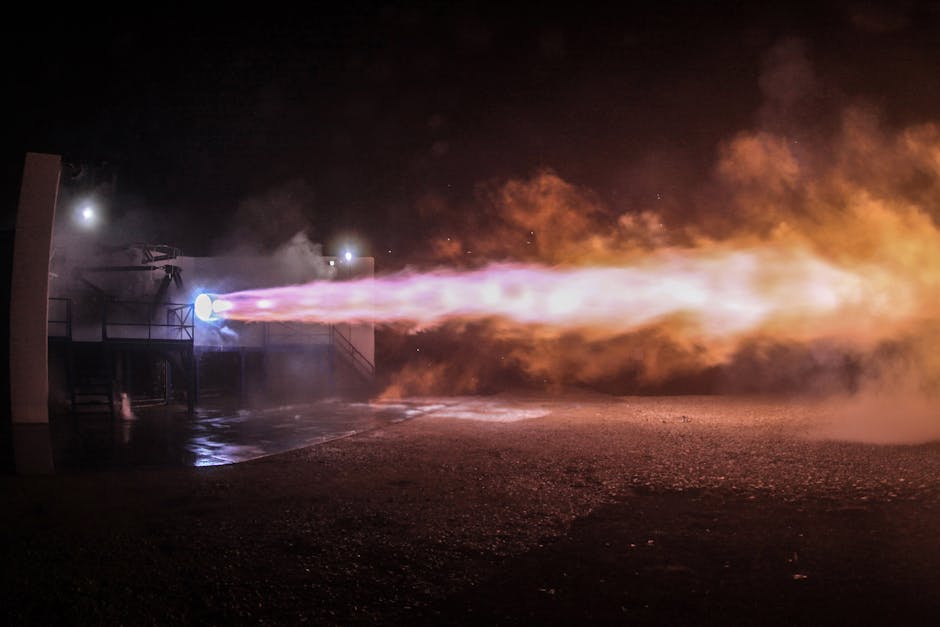
Photo: SpaceX
Tom Mueller helped build the rocket engines that made SpaceX the most powerful launch company on Earth. Now he has raised $500 million at a $4.26 billion valuation to solve the problem his old employer didn't: what happens to a satellite after the rocket drops it off.
Impulse Space, the Redondo Beach, California company Mueller founded and leads, announced the funding round Tuesday. It was co-led by venture firms 137 Ventures and Banner VC, with Founders Fund and Lux Capital also participating. The raise brings Impulse's total funding to more than $1 billion.
The gap SpaceX left open
Getting a satellite into low Earth orbit is no longer the hard part. Launch costs have fallen far enough that hundreds of companies now put hardware into space routinely. The bottleneck has shifted one step further up: once a satellite is in orbit, how does it get where it actually needs to go?
"Launch has pretty much been solved," Mueller told Reuters. "The challenge now is getting everywhere else beyond low Earth orbit."
Impulse builds what the industry calls orbital transfer vehicles, spacecraft that act like space taxis. A customer launches a payload on a rocket, and Impulse's vehicle picks it up and carries it to its final destination, whether that is a higher orbit, a different orbital plane, or somewhere deeper in space. Without a service like this, a satellite sent toward a distant orbit on a standard rocket can take six to ten months of slow drifting under its own limited propulsion before it reaches its operating position.
"Launch with Helios and we'll get you there the same day," said Eric Romo, Impulse's president and chief operating officer, describing the pitch for Helios, the company's larger transfer vehicle, which is scheduled for its first flight in 2027. The company already has a smaller craft, Mira, operating in orbit, and says it has completed three missions and secured hundreds of millions of dollars in customer contracts.
The SpaceX IPO effect
The timing of this raise is not accidental. Last month, SpaceX filed for what could become the largest initial public offering in history. The filing gave outside investors the clearest look yet at the scale of SpaceX's ambitions across satellite internet, artificial intelligence infrastructure, and its reusable Starship rocket. It also lit a fire under anyone who had been sitting on the sidelines of space investing.
When the dominant company in a sector signals it is ready to go public, it tends to validate the entire ecosystem around it. Startups that were previously treated as speculative bets start to look like logical infrastructure plays. Impulse fits that frame precisely. It was founded by SpaceX's first employee, uses SpaceX rockets as the launch platform for its own vehicles, and is building the layer of the space economy that sits just above what SpaceX provides.
That founder pedigree matters to investors in ways that go beyond resume signaling. Mueller led propulsion engineering at SpaceX during the years when the company was proving that reusable rockets could be commercially viable. He knows the orbital mechanics, the hardware tolerances, and the customer relationships that define this market. Investors are essentially betting that the person who built the engine for Act One is well positioned to run Act Two.
The broader pattern is worth watching. As satellite deployments accelerate, the demand for orbital logistics, servicing, refueling, and repositioning will almost certainly grow with them. The question is not whether this infrastructure gets built, but who builds it and who profits from it. Right now, a cohort of SpaceX alumni are placing themselves at the center of that answer, and investors are backing them with the kind of capital that used to be reserved for defense contractors.
Five hundred million dollars says the space economy is no longer just about getting off the ground.