Indonesia just put its coal and palm oil under state control
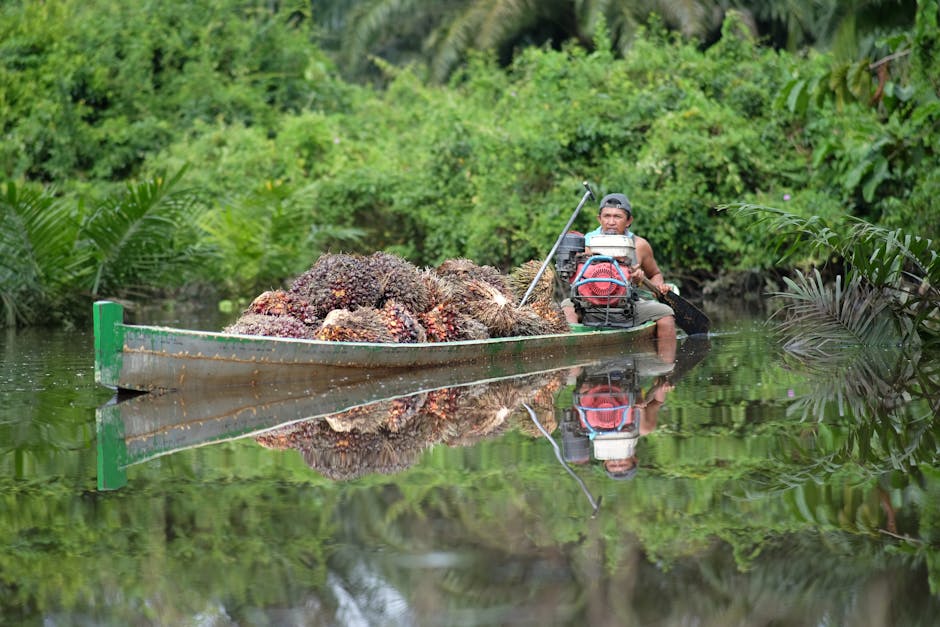
Photo: jirolupat Malioboro
If you use cooking oil, run a power plant, or buy products made with palm oil, Indonesia just made a decision that touches your supply chain. President Prabowo Subianto announced Wednesday that all exports of coal, palm oil, and ferroalloy must flow through a single state-appointed enterprise. No private trader, no matter how large, sells directly to the world anymore.
Indonesia is not a minor player here. It is the world's largest exporter of both thermal coal and palm oil. That means this is not a domestic reshuffling. It is a structural change to how two globally critical commodities reach buyers in Asia, Europe, and beyond.
What Prabowo said
Speaking to parliament in what Reuters described as a fiery address, Prabowo framed the move as correcting decades of failure. His government estimates Indonesia lost roughly $908 billion in revenues over the past 34 years because its commodities were sold too cheaply. He said palm oil, coal, and ferroalloy would now be sold exclusively through a government-run enterprise.
"All sales of our resources, from palm oil, coal must be through a [state-operated enterprise] selected by the government... as sole exporters," he said.
Senior Economic Minister Airlangga Hartarto added that the affected sectors will be reviewed every three months, with more commodities potentially added to the list over time.
How it works in practice
There is a transition period, initially three months, during which existing exporters and their buyers can continue transacting normally while the government-appointed entity monitors deals. That period could extend to the end of the year, according to Rosan Roeslani, the chief of Indonesia's sovereign wealth fund Danantara, which will oversee the new export firm.
Once the transition ends, all commodity exports must run through the state-appointed middleman.
Separately, starting June 1, all Indonesian natural resource exporters must park 100 percent of their export earnings in Indonesian state-owned banks. Airlangga said this piece is aimed at stabilising the rupiah, which has dropped sharply in recent days.
Why markets flinched
Jakarta's main stock index fell 3.5 percent Tuesday and another 2 percent Wednesday before recovering some ground. The concern from traders is straightforward: inserting a state intermediary between sellers and buyers creates uncertainty about pricing and squeezes the margins that private trading firms rely on.
Economists are skeptical the plan will achieve what Prabowo intends. Rizki Siregar, an international trade economist at the University of Indonesia, said the new agency "may create more distortions instead of being the solutions to the distortions, on top of already severe distortions that exporters face."
The concern is that centralised control, intended to capture more revenue, could instead slow deal-making, complicate contracts for foreign buyers, and push some trade toward competitors in Australia, Malaysia, or elsewhere.
The bigger pattern
Indonesia is not alone in this instinct. Resource nationalism, the idea that a country's raw materials should generate wealth for its citizens rather than for foreign traders and multinationals, has been gaining ground across the developing world for years. Indonesia itself has experimented with it before, banning nickel ore exports to force domestic processing investment, a move that attracted foreign battery makers but also triggered a World Trade Organization dispute.
The difference with this new plan is scale and bluntness. Coal and palm oil are not niche inputs. They are commodities bought and sold in enormous volumes under contracts that depend on predictable pricing and reliable delivery. Threading all of that through a single state entity is an administrative and logistical challenge that Indonesia has not yet demonstrated it can manage.
Whether Prabowo's government can close the gap between a nationalist argument that sounds compelling in parliament and a functioning export apparatus that actually works is the question the next three months will begin to answer.