Berkshire just paid $8.5 billion to bet America still needs more homes
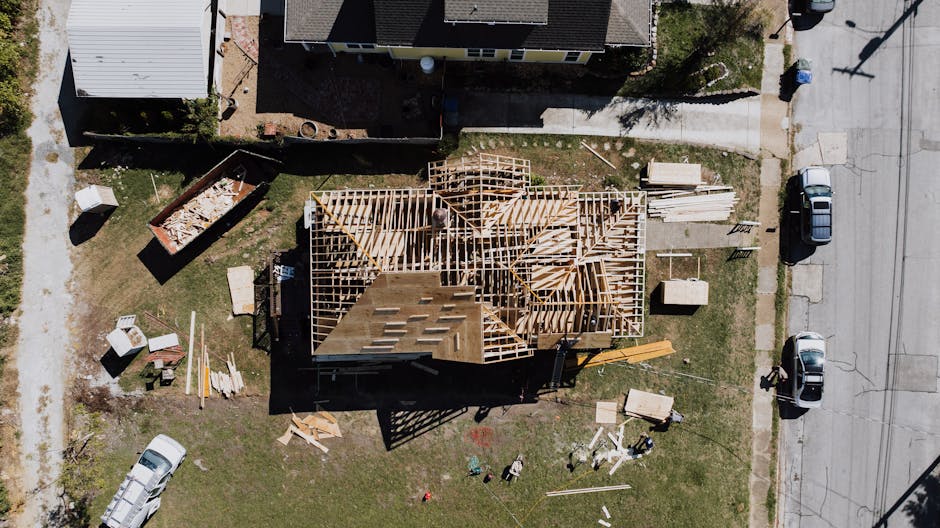
Photo: K
Berkshire Hathaway has agreed to pay $8.5 billion for Taylor Morrison, one of the country's larger homebuilders, and the deal is a direct signal about what Warren Buffett's empire thinks the next decade of American housing looks like.
The all-cash offer values Taylor Morrison at $72.50 per share, a 24% premium over where the stock closed on Friday. The company builds homes across 12 states and develops what it calls lifestyle communities. Once the deal closes, expected in the second half of 2026, Taylor Morrison will come off the New York Stock Exchange and operate as a privately held arm of Berkshire.
Why this deal, and why now
Berkshire already owns Clayton Homes, which it acquired in 2003 and which specializes in manufactured housing, the kind built in a factory and transported to a plot of land. Taylor Morrison is a different animal: site-built homes, the traditional kind constructed from the ground up on a lot. Berkshire CEO Greg Abel said explicitly that the acquisition is meant to broaden Berkshire's footprint into that side of the market.
What that means in practice is that Berkshire is now positioned across two of the main ways America builds homes for people who can't afford the existing housing stock, or who simply can't find what they need in it.
The timing matters. Mortgage rates have been elevated for roughly three years. Existing homeowners with low-rate mortgages locked in before 2022 have largely refused to sell, which has kept the inventory of homes for sale near historic lows. That has pushed more buyers toward new construction. Homebuilders have filled some of that gap, but not enough. The fundamental supply shortage in American housing has not resolved.
Taylor Morrison CEO Sheryl Palmer framed the deal in terms of scale: Berkshire's financial depth and its willingness to think in multi-year cycles would let Taylor Morrison grow in ways it couldn't as a standalone public company. Homebuilding is capital-intensive and slow. Land has to be acquired, permitted, and developed before a single frame goes up. Public markets, which tend to reward quarterly results, are not a natural fit for that rhythm.
What it means for the people trying to buy homes
Here is the honest version: a change in who owns Taylor Morrison does not directly lower the price of a house or move mortgage rates. Those are set by forces much larger than any single builder.
But scale matters at the margin. A Taylor Morrison backed by Berkshire's balance sheet can potentially acquire more land, start more communities, and build faster than one constrained by normal capital costs. If that happens over the next five to ten years, it adds homes to a market that desperately needs them.
Berkshire also brings a long-term orientation that is genuinely unusual. Most investors in public homebuilders need to see returns inside a few years. Berkshire has held See's Candies for over 50 years. That patience could, in theory, allow Taylor Morrison to pursue projects with longer timelines or higher upfront costs, the kind that add supply in supply-constrained places.
The caveat is that one company, even a well-capitalized one, cannot solve a housing shortage that is structural, national, and partly rooted in zoning law and local permitting. Taylor Morrison built roughly 12,000 homes in its most recent fiscal year. The U.S. needs millions more units than currently exist, by most estimates.
What this deal does confirm, loudly, is that the smartest long-term capital in America still thinks the demand side of housing is durable. People need places to live. That need is not going away, and Berkshire just put $8.5 billion on it.