Tesla just launched driverless taxis across Austin, with 50 cars and 30-minute waits
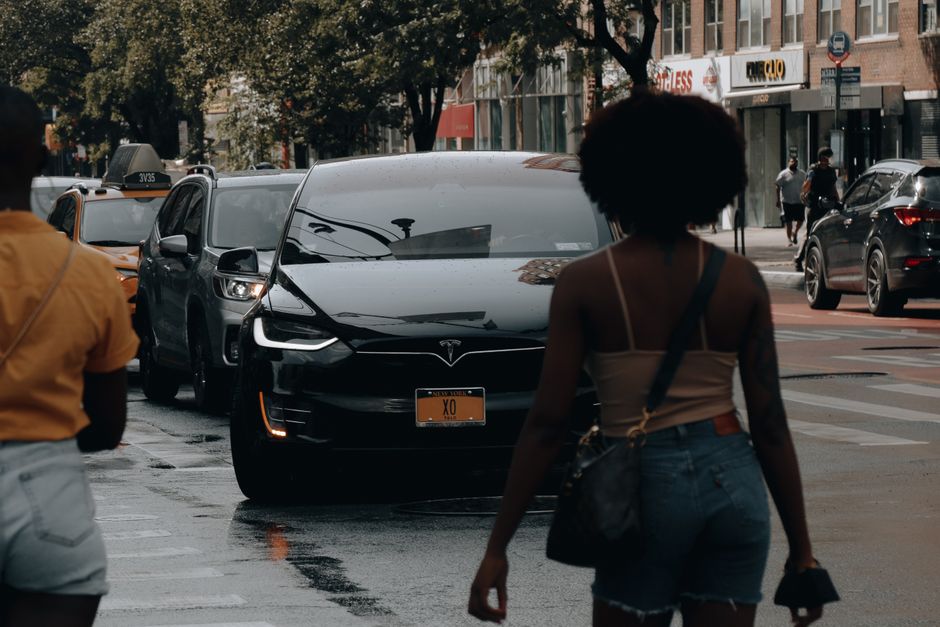
Photo: Reinaldo Simoes
Tesla just declared its driverless taxi service open across the entire Austin metro area, and the gap between that announcement and the reality on the ground tells you a lot about where this technology actually stands.
As of Wednesday, Tesla's robotaxi account posted on X that "unsupervised robotaxi" service now covers the full Austin metro. No safety driver. No human backup behind the wheel. Just a Tesla operating autonomously, picking up passengers.
That is a genuinely significant milestone. But the numbers that follow are sobering.
The scale problem
Tesla is running roughly 50 vehicles in Austin. Alphabet's Waymo, which has been operating in the same city, runs more than 250. That's a five-to-one gap, and riders are already feeling it: wait times can exceed 30 minutes, according to Reuters. For context, if you open Uber in most urban areas, you expect a car in under five minutes. At current scale, Tesla's robotaxi is closer to a shuttle service than a competitor to ride-hailing.
None of that is disqualifying on its own. Every new mobility service starts small. Waymo itself spent years in a single neighborhood in Phoenix before expanding. The question is whether Tesla can close the gap fast enough to matter, and on what timeline.
Elon Musk said last month he expects fully driverless cars to become more widespread across the United States later this year, after already launching in Texas. Tesla also announced expansions to Dallas and Houston in April. So the company is clearly pushing hard on geographic coverage, even while vehicle counts remain thin in each market.
Why this matters beyond Austin
The robotaxi push isn't just a product launch. It's the central argument for Tesla's valuation.
Musk has pivoted the company's stated identity away from electric vehicles and toward artificial intelligence and robotics. The full self-driving software that powers the robotaxi is the core asset in that story. If the technology scales, Tesla becomes something closer to a software and logistics platform than a car company. That's a much larger business. If it doesn't scale, Tesla is an EV maker in a crowded market trying to justify a stock price built on a different future.
The service has been operating in Austin for nearly a year already. That's a meaningful period of real-world learning. Every mile logged in unsupervised conditions is training data, and Tesla's approach has always leaned heavily on fleet-wide learning from its millions of customer vehicles. The argument is that scale of data eventually produces a quality of driving no smaller competitor can match.
Waymo takes the opposite approach: fewer vehicles, more conservative deployment, a safety record it publicises carefully. It now has more than 250 cars in Austin alone. Both companies are betting their method is right. The outcome will probably not be settled this year.
What to watch
The practical thing to watch is not whether Tesla expands to new cities. It probably will. The thing to watch is whether wait times come down in existing markets, because that's what turns a novelty into a transportation option people actually use. Thirty-minute waits are tolerable for a curious rider trying the service once. They don't build a business.
The deeper question is regulatory. Musk's prediction that fully driverless vehicles will spread across the U.S. later this year depends on more than Tesla's engineering. It depends on regulators in each state continuing to allow unsupervised operation, and on no high-profile incident that forces a pause. Waymo has navigated that tightrope for years. Tesla is just beginning to walk it.