Google and Blackstone are betting $25 billion that AI needs a lot more power
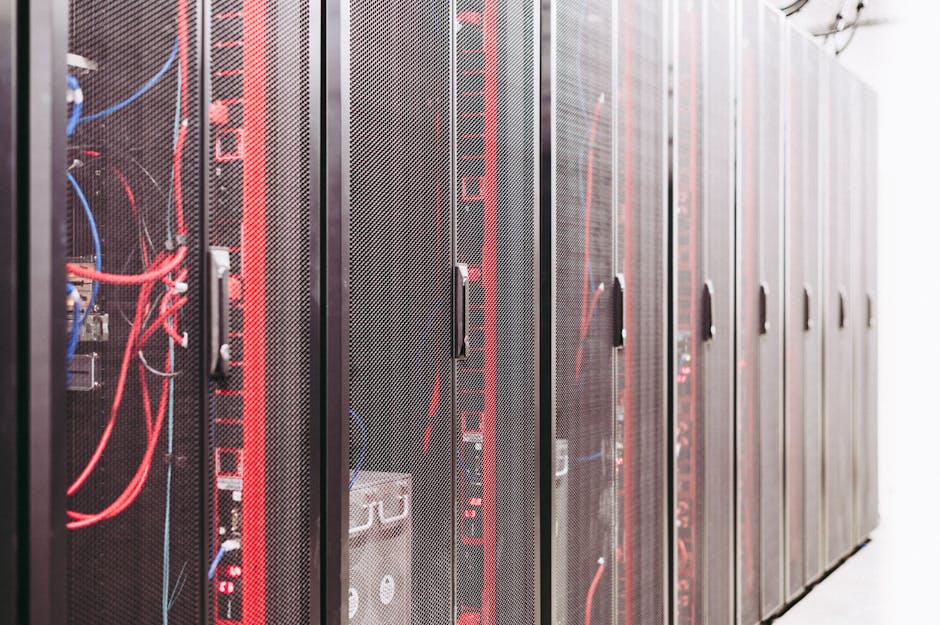
Photo: Brett Sayles
The next time an AI tool answers your question in seconds, somewhere a building the size of several city blocks is consuming enormous amounts of electricity to make that happen. The world does not yet have enough of those buildings. That gap is now attracting some of the largest pools of capital on earth.
Google and Blackstone announced Monday that they are forming a joint venture to build AI computing infrastructure in the United States. Blackstone, the world's largest alternative asset manager, will put in an initial $5 billion in equity. The total investment, including borrowed money, could reach $25 billion, according to Bloomberg News. The goal is to bring 500 megawatts of data centre capacity online by 2027, with more to follow.
The new company will sell access to Google's custom AI chips, known as Tensor Processing Units, through a model where customers pay for computing power as they use it, rather than buying hardware outright. Benjamin Sloss, a longtime Google executive, will serve as CEO.
Why this is happening now
Big Tech companies are expected to spend more than $700 billion on AI infrastructure in 2026 alone. That figure is not abstract. It reflects a real constraint: the models that power AI assistants, coding tools, medical diagnostics, and search require vast amounts of computing power, and the physical infrastructure to deliver that power is being built faster than at any point in the history of the internet.
Google is not the only one racing. Microsoft is opening its largest data centre in India, in Hyderabad, by mid-2026, part of a $17.5 billion investment in the country. Saudi Arabia's state-backed AI company, Humain, has hired Goldman Sachs to arrange financing for data centres worth at least $5.3 billion, aimed at reaching 2 gigawatts of capacity as part of a broader plan to reduce the kingdom's dependence on oil revenue.
The International Energy Agency estimated last month that global investment in data centres will reach $3.9 trillion between 2026 and 2030, a sum it described as "too large to be funded solely from the balance sheets of AI companies." That is exactly the opening Blackstone and similar investors are filling.
What this means beyond the balance sheet
For ordinary people, the consequences are less about stock prices than about what AI can actually do, and how quickly, affordably, and reliably it can do it. More infrastructure means more capacity, which tends to push prices down. Google said at its annual developer conference this week that its newest AI model runs four times faster and costs half as much to run as competing models. It also cut the price of its top-tier AI subscription from $250 to $200 a month.
That pricing pressure is real. At the same conference, Google CEO Sundar Pichai said heavy users, including large companies, could save more than $1 billion a year by switching to Google's models. That savings, if it materialises, flows eventually into the products and services those companies build.
There is a geopolitical dimension too. The Saudi venture is proceeding even as Iranian drone strikes recently hit Amazon cloud facilities in the United Arab Emirates and Bahrain, raising questions about the security of data centre investments across the Gulf. That risk has not stopped the build-out, but it has added a variable that investors are now pricing in.
Back in the United States, Google separately agreed this week to bring more than 20 researchers from AI startup Contextual AI into its DeepMind lab, paying between $80 million and $90 million in licensing fees. It is the latest in a pattern of deals where large tech companies pay for talent and technology without formally acquiring a startup, a structure that avoids mandatory antitrust review. Regulators have called this approach a red flag, but so far it remains legal and common.
The infrastructure race and the talent race are running in parallel. The companies that win both will have a significant say in what AI looks like for the rest of the decade.